

Full Binary Tree: Key Concepts and Uses
Understanding full binary trees 🔍: their unique structure, key properties, construction, and traversal in coding—vital for Pakistani data structure students and programmers.
Edited By
Isabella Turner
The height of a binary tree is a key concept in computer science, particularly for those working with data structures like traders and analysts dealing with algorithmic tasks. In simple terms, the height refers to the longest path from the root node to any leaf node. Understanding this helps in analysing the efficiency of tree operations like search, insert, and delete, which directly impact performance in real-world applications such as market data sorting or cryptocurrency transaction verification.
Binary trees come in different shapes, and their height varies accordingly. A perfectly balanced binary tree with "n" nodes generally has a height of about log₂(n), allowing operations to occur quickly. On the other hand, a skewed tree—one leaning heavily to the left or right—can have a height close to "n", which slows down processing.

Knowing the height helps in optimising algorithms that use binary trees, ensuring faster decision-making and resource management.
Common methods to calculate the height include:
Recursive Approach: This method calculates the height by finding the maximum height between left and right subtrees, adding one for the current node.
Iterative Approach: Using level-order traversal (breadth-first search), this technique visits nodes level by level to measure the tree's depth.
These algorithms are easy to implement in languages like Python or C++, widely used in data-driven financial modelling.
Practically, investors relying on algorithmic trading systems benefit from efficient tree structures where height influences speed. For example, order books in stock exchanges can be managed better using balanced trees to reduce lookup times.
In summary, recognising the height of a binary tree is not just an academic exercise but a necessary skill for improving data structure handling in finance and crypto markets. It affects how quickly systems respond—a crucial factor when milliseconds can mean the difference between profit and loss.
Understanding the height of a binary tree is fundamental when dealing with data structures in computer science. It directly impacts the performance of algorithms that navigate through trees. For example, stockbrokers who rely on efficient data retrieval within financial models find that optimising tree height speeds up searches and updates. Knowing how height influences these operations helps developers design better systems.
A binary tree is a hierarchical data structure where each node holds a value and pointers to its child nodes. Each node has up to two children, commonly called the left and right child. Think of it like a family tree with each person having two children or fewer. This simplicity allows binary trees to model decisions, organise data, and optimise searching.
Nodes form the building blocks here; each contains data and references to other nodes. Picture a financial portfolio where each node represents a stock; its left child might represent related tech stocks, while the right child covers commodities. Such structures help manage and access complex data efficiently.
The left and right child concept represents the two branches that each node can hold. This arrangement allows for organised navigation and manipulation. For example, in an order book, the left child might store lower-priced orders, and the right child higher-priced ones. This clear split supports quicker decision-making when placing or cancelling orders.
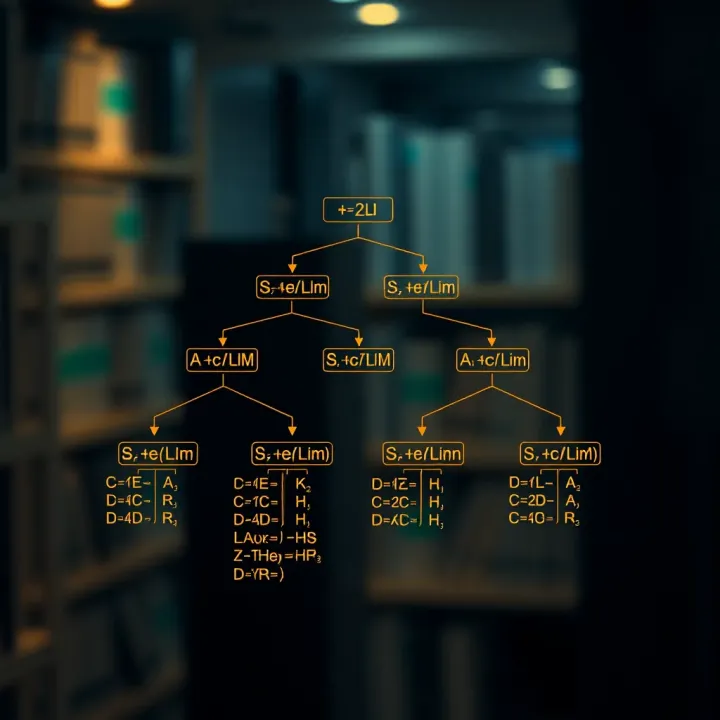
Height refers to the longest path from a node down to a leaf. It differs from depth, which counts the distance from the root down to a specific node. While depth tells how far a node lies from the start, height reveals how tall that branch grows.
Consider the root node's height: it measures the tree’s overall height. If a tree’s height grows too large, traversing it slows down significantly. Balanced trees keep this height minimal, so operations like search stay fast. Traders working with market data know that a balanced representation means quicker access to vital info.
Height also affects tree balance. If one side becomes too tall compared to the other, it causes imbalance, leading to inefficient operations. This resembles an unbalanced load on a network causing bottlenecks. Balanced trees maintain near-equal heights on both sides, preventing excessive delays in data processing.
Algorithm efficiency depends heavily on tree height. A smaller height usually means fewer steps to find or insert data. This boosts performance in real-time applications, such as quick data lookup during active trading sessions. Slow algorithms cost valuable time and money.
For example, when inserting a new transaction record in a binary tree, if height is large, the search for the right place consumes more time. Similarly, searching for a particular contract or trade detail gets longer as height increases. Thus, managing and knowing the height can improve the speed of these core operations.
In short, well-maintained tree height forms the backbone of efficient search, insertion, and deletion operations in data management, crucial for any financial or trading application.
Maintaining optimal tree height helps avoid worst-case scenarios where performance can degrade to linear time. Whether managing portfolios, running automatic trading algorithms, or analysing market trends, understanding binary tree height influences how swiftly you can process and react to data.
Understanding the various types of binary trees and how their height behaves is essential in optimising data structures for efficient operations. Different tree formations influence search times, memory usage, and ease of updates. For investors and traders who develop algorithms for quick decision-making, selecting the right binary tree type can significantly improve computational speed.
Definition and properties: A full binary tree is one in which every node has either 0 or 2 children—no nodes have only one child. This strict structure ensures predictable growth and uniform distribution of nodes at each level. A complete binary tree, on the other hand, allows all levels except possibly the last to be fully filled, with nodes in the last level aligned leftwards. Complete trees tend to be more compact, crucial for memory-sensitive applications.
Height calculation in full trees: The height of a full binary tree with n nodes can be derived from its property that number of nodes at each level doubles. Specifically, height h roughly equals log2(n + 1) - 1. This logarithmic relationship means the tree maintains a modest height even as the node count grows exponentially. In practice, such trees support quick traversals and balanced resource consumption.
Characteristics of balanced trees: Balanced binary trees actively maintain their height to prevent skewed growth. Their primary goal is to keep the height roughly proportional to log(n), where n is the total nodes. This balance reduces the worst-case scenarios for operations like search, insert, or delete, ensuring consistent performance. Balanced trees avoid the extreme cases seen in skewed trees that degrade into linked-list-like structures.
Examples like AVL and Red-Black trees: Popular balanced trees like AVL and Red-Black trees incorporate automated rules to keep themselves balanced after every insertion or deletion. AVL trees maintain a balance factor of ±1 between the heights of left and right subtrees at every node, resulting in tighter balancing but costlier updates. Red-Black trees allow a looser balancing with colour properties, making insertions and deletions faster without sacrificing much on height.
These trees are widely used in database indexing and real-time systems where guaranteed response times are critical.
Single-sided growth: Skewed binary trees grow in a single direction, either to the left or right, resembling a linked list rather than a tree. This happens when each node only has one child due to ordered or pathological input data sequences. For example, inserting sorted stock prices into a binary search tree without balancing will cause skewed shape.
Impact on height and performance: Skewed trees have height equal to the number of nodes, losing the logarithmic height advantage. In practical terms, this means operations degrade from O(log n) to O(n) time, introducing significant delays particularly when data scales to thousands or millions of points. This performance hit is detrimental to trading algorithms needing fast queries, making balancing techniques critical.
Efficient tree structuring is key for applications needing speed and reliability like trading platforms. Recognising the type of binary tree and its height behaviour helps optimise your systems from the ground up.
Key takeaway: Choosing and maintaining the right tree structure directly affects height and, subsequently, execution speed and resource consumption in financial data operations.
Knowing how to calculate the height of a binary tree is key in many computer science applications, from optimising search algorithms to managing memory efficiently. Practical calculation methods help programmers and analysts determine performance bottlenecks and maintain balanced trees, which directly affect data retrieval speeds and system responsiveness. Here, we explore common techniques used in practice, highlighting their benefits and trade-offs with clear examples.
The recursive method is a straightforward way to find the height of a binary tree. It works by checking the height of the left and right subtrees of a node and returning the larger value plus one (for the current node). This approach relates naturally to the definition of tree height, which is the longest path from the root node down to a leaf.
Using recursion simplifies the code and directly translates the tree’s structure into the function calls. For example, if you have a tree with nodes extending unevenly on either side, the recursion dives down each path until it reaches a leaf, then backtracks to calculate the maximum height.
In code, this typically looks like:
python def height(node): if node is None: return 0 left_height = height(node.left) right_height = height(node.right) return max(left_height, right_height) + 1
This snippet efficiently returns the height, but deep recursion might cause stack overflow for very tall trees. Still, in most practical cases, this method is easy to implement and understand, making it popular in Pakistani programming tutorials and software projects alike.

### Iterative Methods Using Level Order Traversal

An alternative to recursion uses level order traversal, which processes the tree level by level. Typically implemented with a queue, this technique counts how many levels exist as it visits nodes, thereby calculating height without calling the function repeatedly.

The queue holds nodes currently being processed. With each pass, all nodes at the current level are dequeued and their child nodes enqueued. Once this cycle finishes, increment the level count. This repeats until all levels are traversed.

Step-by-step, the algorithm:

1. Initialize a queue with root node.
2. While the queue is not empty:
   - Process all nodes currently in queue.
   - Enqueue their child nodes.
   - Increment height count.

This iterative process avoids deep recursion and is especially useful for unbalanced or very large trees where memory constraints exist.

### Comparing Efficiency of Different Methods

From the efficiency perspective, both methods traverse every node once, so their time complexity remains O(n), where n is the number of nodes. The recursive method's space complexity can be O(h) due to function call stacks, with h as tree height. In contrast, the iterative method’s space depends on the maximum width of the tree, which could be larger if several nodes at a level exist.

For balanced trees, recursion typically has less overhead, while in skewed trees, iteration benefits by not deepening stack calls. Therefore, choose recursion for trees that are balanced and relatively small, and iterative approaches for larger or unpredictable structures.

> Understanding these practical methods enables better decision-making in software design, especially for data-intensive applications in finance and trading platforms where data search speed and system efficiency are vital.

By applying these techniques thoughtfully, you can ensure your binary tree calculations remain robust, performant, and suited to your specific needs.

## How Binary Tree Height Influences Real-World Applications

Binary tree height directly impacts the performance and efficiency of many algorithms and systems that rely on hierarchical data structures. In real-world applications, managing the tree height can mean the difference between fast, responsive operations and sluggish, resource-heavy processing. This section explores how tree height affects key areas such as search algorithms, database indexing, and system performance.

### Search and Sorting Algorithms

#### Binary search trees effectiveness

The height of a binary search tree (BST) is a strong determinant of how quickly it can perform search operations. In an ideally balanced BST, the height is kept minimal, allowing searches to complete in approximately log₂(n) time, where n is the number of nodes. For example, if a trading platform uses a balanced BST to store stock symbols, it can find the requested stock data very swiftly. However, if the tree becomes skewed — resembling a linked list — the height increases, causing search times to grow linearly with n. This slowdown can severely affect time-sensitive applications like high-frequency trading.

#### Relation to sorting speeds

Sorting algorithms such as Tree Sort rely on building a BST and then performing an in-order traversal to get sorted output. The height of the tree influences the overall sort speed. A balanced tree ensures that insertion and traversal remain efficient, resulting in O(n log n) time complexity. On the other hand, a skewed tree increases the height, pushing the time complexity closer to O(n²). In financial data analysis where large datasets must be sorted quickly, maintaining balanced tree height ensures timely results for traders and analysts.

### Database Indexing and Query Optimisation

#### Importance of balanced tree height

Database systems heavily depend on efficient indexing to speed up query retrievals. Balanced tree structures like B-trees or AVL trees keep the height low, which ensures fewer disk reads and quicker data access. For instance, in a stock exchange database tracking millions of transactions per day, optimised indexing through balanced trees minimises query response times. This advantage translates directly to better user experience and system throughput.

#### Examples from SQL and NoSQL systems

Most SQL databases implement indexing using B-tree or B+ tree variants to maintain balanced height for quick lookups and range queries. Meanwhile, some NoSQL solutions employ balanced trees or other hierarchical indexes to manage massive unstructured data efficiently. Systems like MongoDB use indexing strategies that benefit from balanced trees to handle complex queries with minimal latency. For financial analysts running complex filters on large datasets, these structures improve performance significantly.

### Memory Usage and System Performance

#### Height impact on recursion depth

Many tree algorithms use recursion, where the height of the tree limits how deep the call stack can go. A tall, skewed binary tree increases recursion depth, risking stack overflow errors and higher memory consumption. This is critical in automated trading bots or real-time analytics tools that process hierarchical data structures continuously. Keeping tree height low reduces recursion depth, resulting in safer and more efficient code execution.

#### Loadshedding analogy for resource management

Think of tree height like loadshedding schedules in Pakistan: the longer the outage cycle (height), the more disruptions you face. Similarly, taller trees mean longer wait times for operations, which strain system resources just as prolonged loadshedding stresses daily life. Optimising binary tree height acts like a well-planned loadshedding rota, balancing loads smoothly to keep the system responsive and resource-efficient.

> Maintaining an optimally balanced binary tree height plays a crucial role not just in algorithmic efficiency but also in overall system stability and user experience across financial technologies.

This understanding helps traders, developers, and analysts balance speed, memory, and resource use in their applications for better outcomes.

## Summary and Best Practices for Working with Tree Height

Understanding the height of a binary tree is essential when working with data structures, especially for those engaged in tasks like algorithm optimisation or system design. This section summarises the core concepts and offers best practices to help maintain efficient tree structures, improving both performance and reliability in practical applications.

### Key Points to Remember About Binary Tree Height

#### Definitions and types reviewed

The height of a binary tree refers to the number of edges on the longest path from the root node to any leaf node. Recognising this measurement is vital since it directly affects how operations like search, insertion, and deletion perform. Trees such as full, complete, balanced, and skewed each present distinct height traits that influence their efficiency differently. For example, a skewed tree has a height equal to the number of nodes minus one, which degrades performance, whereas a balanced tree like an AVL maintains a minimal height for faster operations.

#### Calculation methods overview

There are mainly two approaches to calculate binary tree height: recursive and iterative. The recursive method involves traversing to leaf nodes while computing heights for left and right subtrees, then returning the larger value plus one. On the other hand, iterative methods use techniques like level order traversal with a queue to measure height level by level. Depending on the size and nature of the tree, selecting the right method can help avoid excessive memory use or slow runtimes, which is particularly useful in resource-constrained environments.

### Tips for Maintaining Efficient Tree Structures

#### Balancing strategies

To keep operations efficient, balancing a binary tree is crucial. Trees that are too tall (unbalanced) lead to longer search times, resembling a linked list more than a tree. Techniques such as AVL rotation or Red-Black tree properties ensure the height remains logarithmic compared to the number of nodes. Implementing these strategies reduces the risk of poor performance, especially when handling large datasets or real-time applications like stock price tracking or cryptocurrency exchanges.

#### Choosing the right tree type for your application

Different applications demand different tree types. For instance, a database indexing system in financial software benefits from balanced trees ensuring fast query resolution under heavy transactional loads. Conversely, if insertions only happen at one side, a skewed binary tree might form, which should be avoided in critical systems. Therefore, understanding the workload and selecting a tree—whether full, complete, balanced, or otherwise—is key to optimising performance.

> Maintaining the right binary tree height through proper calculation and balancing directly contributes to faster algorithms and better system efficiency, crucial for finance professionals handling large-scale data.

Using these guidelines will help you manage binary trees effectively, ensuring your applications run smoothly without unnecessary delays or resource strain.Understanding full binary trees 🔍: their unique structure, key properties, construction, and traversal in coding—vital for Pakistani data structure students and programmers.

Explore binary tree traversal methods 🚀 with practical examples and clear code to master tree data structures in programming tasks efficiently.

📚 Get a detailed grasp of inorder traversal in binary trees, covering step-by-step techniques, recursive vs iterative methods, and key uses in programming and computer science.

Learn how to build and use binary search trees in C++ with practical code examples 🖥️. Understand insertion, deletion, traversal & best practices for smooth performance.
Based on 5 reviews