
Understanding Binary Search with Examples
🔍 Learn binary search with clear examples! Understand how this fast algorithm finds values in sorted arrays, avoids common mistakes, and boosts coding skills. 📊
Edited By
James Wentworth
Binary subtraction is a fundamental skill in digital electronics and computing. Unlike the usual decimal subtraction learned in schools, binary subtraction works with just two digits — 0 and 1. This simplicity is perfect for electronic circuits but can be tricky at first if you are more familiar with base-10 numbers.
In essence, binary subtraction follows similar rules to decimal subtraction but uses borrowing differently due to the limited digits. For example, subtracting 1 from 0 requires borrowing from the next higher bit, just like how in decimal you'd borrow when subtracting a larger digit from a smaller one.

Understanding this method is especially important for traders and financial analysts utilising algorithmic trading software or cryptocurrency applications that rely on low-level data processing. Even a simple miscalculation can lead to wrong data outputs or trading errors.
Here’s a straightforward way to start:
Binary digits (bits): Only 0 and 1 exist. The difference between these is either 0 or 1.
No-borrow subtraction: For instance, 1 - 0 = 1, and 1 - 1 = 0.
With borrowing: If you subtract 1 from 0, you borrow a '1' from the next bit on the left, which becomes 0, effectively turning the current 0 into 2 (binary 10).
Mastering this borrowing process is key to accurately performing any binary subtraction problem.
A practical example:
Suppose you want to subtract binary 1011 (which is 11 in decimal) from 1101 (13 in decimal). You start from the rightmost bit:
1 - 1 = 0
0 - 1: can't do, borrow 1 from next bit
Next bit is 1, turns to 0, borrowed 1 makes current bit 10 (binary)
10 - 1 = 1
Next bit 0 - 0 = 0
Leftmost bit 1 - 1 = 0
Final result: 0010 which is 2 in decimal, as expected.
The next sections will break down these rules and the borrowing technique with more detailed examples to solidify your grasp. This knowledge can help you debug software that uses binary maths or optimise performance in digital systems—valuable skills in Pakistan's growing tech and financial sectors.
Binary numbers form the backbone of modern computing and digital technologies. Understanding their basics is key not only for software developers or hardware engineers but also for traders and financial analysts who rely on technological tools daily. At its core, binary uses just two symbols, 0 and 1, to represent information, making it efficient and straightforward for machines to process.
Binary numbers are a number system based on two digits, zero (0) and one (1), unlike the decimal system, which uses ten digits (0–9). Each binary digit, called a bit, represents a power of two, depending on its position. For example, the binary number 1011 equals 11 in decimal—(1×8) + (0×4) + (1×2) + (1×1). The simplicity of this system allows digital devices to easily represent complex data with just sequences of bits by using electrical signals (low voltage for 0 and high voltage for 1).
This binary system also underlies the functioning of computer memory and processors. Banks of bits store numbers, characters, and instructions, enabling computers to perform calculations and execute software.
Computers depend on binary because it matches the physical realities of electronic circuits. Transistors, the building blocks of processors, can only be switched on or off. This on/off state aligns perfectly with the binary digits 1 and 0. This avoids errors from trying to read infinite voltage levels, making binary both reliable and fast.
In trading and financial analysis, software platforms that run on computers use binary calculations behind the scenes. Operations like encryption of financial data, executing trades algorithmically, or running market simulations all depend on manipulating binary numbers efficiently.
In essence, the entire digital world—from simple calculators to complex stock exchange platforms—relies on binary as the language that computers understand and use to handle data.
Grasping binary numbers helps professionals appreciate why certain technologies behave the way they do. It also builds a foundation to understand more complex processes like binary subtraction, vital for error checking in digital circuits or programming low-level operations.
Whether you are monitoring markets or building trading algorithms, recognising the fundamentals of binary numbers helps you connect better with the technology that powers modern finance.
Binary subtraction is a fundamental skill in computing and digital electronics, essential for tasks ranging from simple calculations to complex processor operations. Understanding the basic principles equips you to handle binary math effectively and avoid common errors that could cost time or resources. For example, when dealing with financial data or algorithm development, accuracy in binary operations can directly impact outcomes.
Before you do any binary subtraction, you should remember these core rules:
0 - 0 = 0: Nothing to subtract, result is zero.
1 - 0 = 1: Simple case, one minus zero remains one.
1 - 1 = 0: Equal bits cancel out.
0 - 1 = 1 (borrow): This requires borrowing from the next higher bit.
These rules mirror decimal subtraction but have fewer digits to deal with — just 0 and 1. For instance, subtracting 1011 (decimal 11) minus 0101 (decimal 5) in binary demands attention to borrowing where a 0 subtracts 1.
Borrowing in binary works differently than in decimal but follows a logical pattern. When a bit with value 0 tries to subtract 1, like in the earlier example 0 - 1, you borrow from the nearest 1 on the left. Borrowing converts the 0 to 2 in binary (which is 10), then you subtract 1, leaving 1.
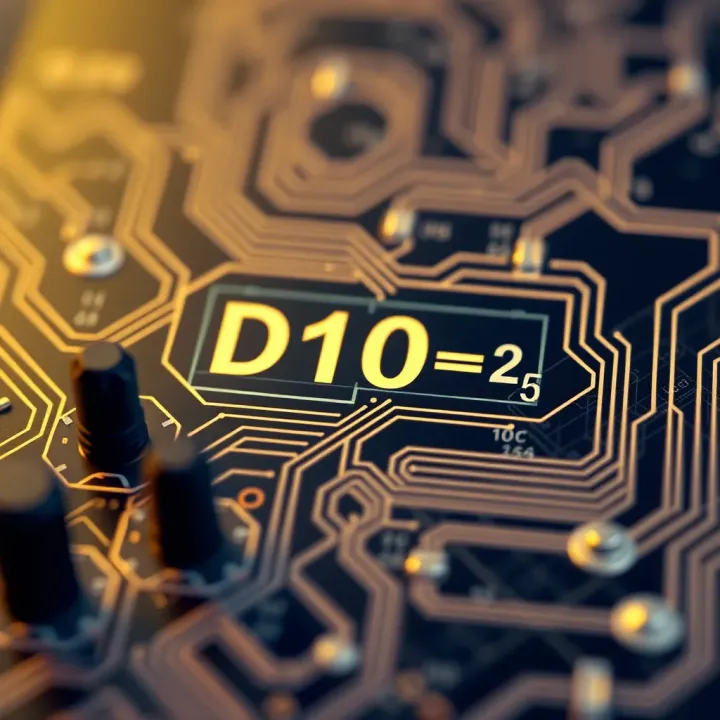
Let's clarify with this example:
Subtract 1000 (8 decimal) minus 0001 (1 decimal).
Start from the rightmost bit:
0 - 1 isn't possible, so borrow from the left bits.
The first 1 found becomes 0, and the borrowed bit adds to the immediate right 0, turning it to 10 (binary for 2).
Now, 10 - 1 = 1.
Borrowing could cascade if the nearest left bit is also 0, requiring you to move further left until you find a 1. This might feel tricky, but it’s easily practiced through examples.
Remember: Borrowing is the key to managing cases where the top bit is smaller; practising it ensures you master binary subtraction confidently.
Mastering these principles not only helps with manual calculations but also builds a foundation to understand how processors and calculators compute differences at the hardware level. For Pakistani financial analysts or software developers, accurate binary arithmetic is a must-have skill when working with data-intensive models or embedded systems.
Understanding binary subtraction through step-by-step examples is crucial for grasping how digital systems handle basic arithmetic. For investors and analysts monitoring tech stocks or cryptocurrency mining companies, knowing these basics helps appreciate how hardware processes data efficiently.
Breaking down binary subtraction clarifies how bits interact during the subtraction, including borrowing, which is quite different from decimal subtraction. Stepwise examples show the mechanism explicitly, ensuring you won’t be lost in abstract concepts alone.
Start with simple cases where the top bit (minuend) is larger than or equal to the bottom bit (subtrahend). In binary, subtracting 0 from 1 or 1 from 1 doesn’t require any borrowing.
Consider 1010 (which is 10 in decimal) minus 0011 (3 in decimal):
0 - 1** can’t do without borrowing, but here it's 0 - 1, so borrowing is needed (corrected below in explanation). For simple subtraction without borrowing, try 1101 (decimal 13) minus 0100 (decimal 4):
Performing bitwise subtraction right to left:
1 - 0 = 1
0 - 0 = 0
1 - 1 = 0
1 - 0 = 1
Result: 1001 (decimal 9)
This shows subtraction without borrowing is straightforward — you subtract each bit directly.
Borrowing occurs when the minuend bit is smaller than the subtrahend bit at that position. Since binary digits can only be 0 or 1, borrowing means taking 1 from the next left bit, which converts to 2 in decimal (or binary '10').
Example: 1001 (decimal 9) minus 0011 (decimal 3):
Rightmost bit: 1 - 1 = 0
Next bit: 0 - 1 — can't subtract 1 from 0, so borrow 1 from the left bit (which is 0) leading to a chain borrow.
Essentially, you’ll look left until you find a '1' to borrow. After adjustments:
Borrow from bit 4 (which is 1), making it 0
Bits in between become 1 (borrowed state)
Now, the second bit effectively has 2 (10 in binary) — so 10 (2) - 1 = 1
Completing the subtraction:
Third bit: After borrowing, 1 - 0 = 1
Fourth bit: 0 - 0 = 0
Final answer: 0110 (decimal 6)
This process highlights why understanding borrowing is vital.
Handling multiple bits together is essential for real-world digital computations. For example, subtracting 11011 (decimal 27) minus 10101 (decimal 21):
Start right to left:
1 - 1 = 0
1 - 0 = 1
0 - 1 — borrow required from next higher bit
After borrowing and adjustments, continue subtracting remaining bits
After working through each step carefully, the result is 00110 (decimal 6).
Using multiple bit subtraction examples helps trading analysts understand how data is manipulated at the hardware level, which impacts computing speed and efficiency.
By mastering these examples, you can better appreciate digital device performance and even evaluate technological assets with a clear understanding of their computational foundations.
Binary subtraction, while conceptually straightforward, can trip up many learners and even practitioners if not handled carefully. A clear grasp of common issues and practical tips helps avoid errors and builds confidence when working with binary numbers in real-world applications such as digital circuits or algorithm design.
One frequent mistake is ignoring the borrowing process when subtracting a larger bit from a smaller one. For example, trying to subtract 1 from 0 in a given bit without borrowing from the next higher bit leads to incorrect answers. Remember, in binary subtraction, borrowing means taking a '1' from the next bit, which is equivalent to adding 2 to the current bit. Missing this step, especially with multiple bits, produces wrong results.
Another common error is confusing the subtraction rules. Unlike decimal, binary subtraction follows simple rules:
0 - 0 = 0
1 - 0 = 1
1 - 1 = 0
0 - 1 requires borrowing
Failing to apply these correctly leads to mistakes, especially in complex examples.
Overlooking carry-overs in multi-bit subtraction is another pitfall. For example, when borrowing cascades across several bits, tracking each borrowed bit precisely is essential. Carelessness here can cause cascading errors.
Finally, mismatched bit lengths in the numbers being subtracted can cause confusion. Always align binary numbers properly, padding the smaller with leading zeroes to keep bit positions clear.
Consistent practice with varied examples is vital. Start with simple problems without borrowing, advancing gradually to multi-bit cases involving multiple borrows.
Use visual aids like tables or lined paper to track borrowing steps carefully. Writing out each step prevents mixing bits and helps in spotting errors early.
Try converting binary subtraction problems to their decimal equivalents to verify results. This cross-checking strengthens understanding and builds confidence.
Finally, apply binary subtraction in practical scenarios. For instance, simulate a simple digital counter decrement or subtract IP addresses in networking tasks. Real-life applications reinforce concepts better than theory alone.
Accurate binary subtraction is foundational in digital electronics and programming. Avoiding common mistakes and following structured practice will save time and improve reliability when dealing with binary data.
By focusing on these issues and tips, learners and professionals alike can develop solid binary subtraction skills crucial for technology fields, including trading algorithms and embedded system programming.
Binary subtraction may seem purely academic at first, but it plays a significant role in various technological and educational fields. Understanding how to subtract binary numbers accurately forms the foundation for many operations inside digital devices and has practical value for learners, especially in Pakistan's growing computer science education sector.
At the heart of every digital processor lies a complex system of arithmetic logic units (ALUs) where arithmetic operations like subtraction are performed in binary form. This process is essential for calculations, data processing, and decision making within CPUs (central processing units). For example, an ALU uses binary subtraction to determine if one number is smaller than another, which affects branching decisions in programming.
Moreover, subtraction in binary is pivotal for digital signal processing, error detection algorithms, and cryptographic functions implemented in hardware. If you recall, simple operations like calculating change after a transaction on an electronic payment terminal depend on these binary calculations happening behind the scenes. In Pakistan, with the rise of fintech platforms like JazzCash and Easypaisa, reliable binary arithmetic is essential for ensuring quick, error-free transactions.
Precise binary subtraction enables digital systems to function correctly, affecting everything from smartphone apps to automated industrial systems.
Binary subtraction is one of the first practical concepts introduced in computing courses across Pakistani universities and colleges. It equips students with the fundamental skills to understand how computers perform arithmetic operations internally. Boards and institutions such as the Higher Education Commission (HEC) and various technical universities include binary arithmetic topics deliberately to prepare students for careers in software development, hardware engineering, and IT.
In particular, understanding borrowing and subtraction in binary helps students while studying assembly language programming or microprocessor architecture. It also builds a strong base for examinations like CSS (Central Superior Services), computerized aptitude tests, and engineering entrance exams like ECAT.
Teachers in Pakistan often use binary subtraction exercises to develop logical thinking and problem-solving skills. These practical exercises have a direct impact on how well students handle higher-level concepts like data structures, algorithms, and computer architecture. Ultimately, proficiency in binary subtraction supports technology development in the country by producing skilled graduates ready for the digital economy.
Binary subtraction underpins arithmetic operations in digital circuits and processors.
Reliable binary computations are crucial for fintech and digital platforms thriving in Pakistan.
Pakistan’s computer science curriculum places strong emphasis on binary subtraction to sharpen foundational computing skills.
Grasping the practical applications makes it clear why investing time into binary subtraction will pay off for learners and professionals alike, whether working in Karachi’s tech hubs or pursuing education in smaller cities.
🔍 Learn binary search with clear examples! Understand how this fast algorithm finds values in sorted arrays, avoids common mistakes, and boosts coding skills. 📊
Explore binary relations 🔗 with practical examples from math and computer science. Learn types, properties, and real-world uses clearly and effectively.

Learn the basics of binary addition and subtraction with easy-to-follow rules and examples 🧮. Explore subtraction methods and their role in computing 💻.

Explore clear examples of binary relations in math 📚. Learn key definitions, properties, types, and real-world uses in a practical way.
Based on 7 reviews