

Benefits of Risk Management for Success
Explore how effective risk management helps identify dangers, improves decision-making, limits losses, and strengthens financial stability for your business. 📉💡
Edited By
Michael Andrews
Risk management is about spotting potential problems before they hit and planning how to deal with them. For traders, investors, and financial analysts in Pakistan, understanding risk management isn’t just a nice-to-have—it’s a key skill that can protect capital and improve decision-making.
At its core, risk management involves identifying risks, assessing their impact, and choosing the best way to handle them. These risks might come from market volatility, political changes, or sudden regulatory announcements—common factors influencing Pakistan's financial markets. Without a solid risk strategy, even experienced investors can face unexpected losses.

Consider a stockbroker dealing with shares listed on the Pakistan Stock Exchange (PSX). They need to monitor market news closely, such as changes in State Bank of Pakistan (SBP) policies or sudden macroeconomic shifts like rupee depreciation. By anticipating these risks, they can advise clients on adjusting portfolios or using stop-loss orders to prevent heavy losses.
Risk management tools come in different shapes. Some traders rely on technical analysis like moving averages and Relative Strength Index (RSI) to judge when to enter or exit trades safely. Others use diversification across Pakistani sectors—such as banking, textiles, and energy—to spread exposure. Cryptocurrency enthusiasts, facing a highly volatile market, might use tighter stop-loss settings or limit their investment size to manage risks better.
Effective risk management isn't about avoiding risks entirely but understanding them well enough to make informed decisions that balance potential gains against possible losses.
Practical methods include:
Risk Identification: Spotting internal and external risks like regulatory changes by the Securities and Exchange Commission of Pakistan (SECP) or liquidity issues.
Risk Assessment: Calculating the likelihood and impact of risks, for example, gauging how a 5% drop in oil prices might affect energy stocks.
Risk Control: Applying tools like hedging with futures contracts, diversifying portfolios, or setting strict stop-loss orders.
Pakistan's dynamic financial landscape demands keeping an eye on geopolitical events and economic indicators, such as inflation trends reported by the Pakistan Bureau of Statistics. Understanding these factors helps traders and investors adjust their tactics promptly.
To sum up, mastering risk management is crucial for safeguarding investments and seizing opportunities in Pakistan's markets. Whether dealing with equities, forex, or crypto assets, a clear risk approach tailored to local conditions improves resilience and supports long-term success.
Risk management is more than just a business buzzword; it’s a practical approach to spotting, assessing, and controlling potential threats that can harm assets, reputation, or operational flow. For traders and investors in Pakistan, understanding risk management helps navigate volatile markets, from currency swings to regulatory shifts. This section lays the foundation by clarifying what risk management actually entails and why it is necessary.
Risk refers to situations where the outcome is uncertain but can result in loss or harm. In financial terms, it’s the possibility that an investment will yield lower returns or even incur losses, such as a stock falling due to economic instability. For instance, a Karachi-based investor buying shares during a period of political unrest faces the risk that market confidence may drop, impacting share prices.
Risk management involves recognising these uncertainties beforehand and planning accordingly. It’s not about eliminating risk entirely—that’s impossible—but about identifying where the risks lie and deciding how to handle them. The process might include diversifying investments or using hedging strategies to soften potential blows.
Risk can often be measured and quantified to some extent, while uncertainty refers to situations where outcomes are unknown and hard to predict. For example, currency fluctuations can be somewhat forecasted by examining economic indicators and exchange trends—this falls under risk. However, an unexpected political coup or natural disaster introduces uncertainty with consequences that are very hard to foresee.
For financial analysts, recognising this difference is essential. Decisions based on clear risks allow for calculated moves, but uncertainty requires more flexible, adaptive strategies. Pakistani markets, with their mix of predictable economic events and sudden shocks, highlight the need for managing both risk and uncertainty effectively.
Managing risk helps safeguard a business’s tangible and intangible assets. Take a trader in Lahore who imports electronics; fluctuations in the dollar rate might increase costs, while delays at customs can disrupt supply. Poorly managed, these issues lead to financial losses and damage credibility among customers and suppliers. Effective risk management, including currency hedges and contingency planning, reduces these vulnerabilities.
Reputation plays a key role in long-term success. In Pakistan’s tightly-knit business communities, rumours of financial mishandling or failure to deliver can spread fast and erode trust. A company that demonstrates proactive risk handling builds confidence among investors and clients.
Risk management lays the groundwork for uninterrupted operations, especially in a context where challenges like loadshedding and changing tax policies often arise. For example, an IT startup in Islamabad might face recurring power outages disrupting service delivery. By having backup generators and alternative workflows, the company can ensure clients face minimal downtime.
Moreover, risk management prepares firms for regulatory changes, including those from the Federal Board of Revenue (FBR). Businesses that anticipate such shifts and adjust their strategies accordingly avoid penalties and operational hiccups. This readiness ultimately keeps business running smoothly even during turbulent times.
"Understanding risk management is not just for financial experts; it is a practical necessity for anyone involved in Pakistani markets to protect investments and ensure steady growth."
Having a clear grasp of risk and how to manage it forms the backbone for more advanced strategies covered in the following sections.
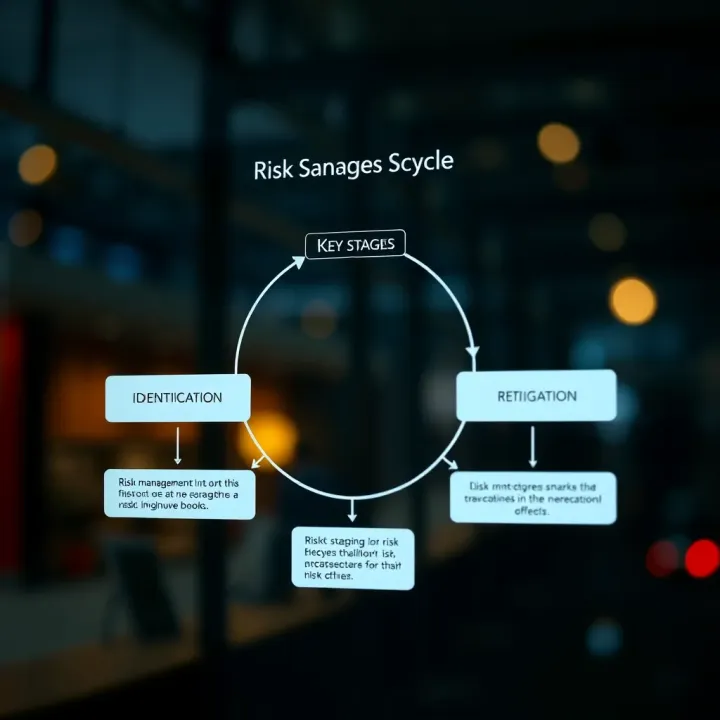
Understanding the different types of risks businesses and individuals face is essential for effective risk management. Identifying these risks early helps in preparing suitable strategies to avoid or mitigate their effects. This section outlines financial, operational, and strategic risks relevant in Pakistani market contexts, offering actionable insights for traders, investors, and financial professionals.
Currency volatility directly affects businesses with import-export exposure. For example, a textile exporter in Karachi may find Rs earnings worth less if the US dollar rises sharply in PKR terms. Inflation also erodes purchasing power, increasing costs of raw materials and wages, which can squeeze profit margins. Traders in the stock market must consider inflation rates and currency trends when evaluating company fundamentals or deciding on foreign currency investments.
Credit risks arise when buyers or counterparties fail to meet payment obligations. For Pakistani SMEs, delayed payments or defaults can disrupt cash flow and stall operations. Liquidity risk relates to the inability to convert assets into cash quickly without loss. For instance, investors in less liquid stocks or real estate might struggle to exit positions promptly during market downturns, risking losses or missed opportunities.
Operational risks include failures in internal processes like supply chain breakdowns or IT system outages. A Karachi-based manufacturing unit may face production halts if suppliers delay raw material delivery or machinery breaks down. Such disruptions directly impact output and financial health. Therefore, having backup plans and routine maintenance schedules is vital.
Unreliable power supply remains a critical operational risk across Pakistan. Businesses, especially in sectors like IT services or manufacturing, face sudden load shedding that halts work and causes delays. These interruptions increase costs through backup generator use or overtime payments. Infrastructure challenges such as poor transport networks can add to supply chain risks, complicating timely deliveries.
Frequent changes in tax laws can unsettle business planning. For example, sudden adjustments in Federal Board of Revenue (FBR) tax slabs or duty structures impact cash flow and compliance costs. Keeping up with these regulatory shifts allows businesses to restructure operations or pricing proactively, maintaining competitiveness without falling foul of authorities.
The rapidly evolving Pakistani market intensifies competition. New entrants or aggressive pricing by rivals may erode market share. Beyond financials, reputational risks emerge from poor customer service or negative publicity on social media, affecting brand image. Managing these risks involves continuous market analysis and strong communication strategies.
Identifying specific risks in your business environment is the first step towards robust risk management, especially in Pakistan’s dynamic economic and regulatory landscape.
By recognising these risk types and their practical implications, businesses and investors can better anticipate challenges, enhancing decision-making and long-term sustainability.
Effective risk management rests on a clear, step-by-step approach. Businesses and investors alike gain huge benefits by following practical methods to spot, assess, and handle risks early. This reduces surprise losses and supports better decisions under uncertainty. For example, a Karachi-based export firm saved millions by identifying currency risk before a rupee depreciation hit its profit margins.
Spotting risks early is crucial to staying ahead. Techniques like brainstorming, scenario analysis, and consulting frontline staff help reveal hidden threats before they escalate. Traders, for instance, use daily market scans and news feeds to identify shifts that might affect their portfolios.
Audits and regular monitoring act as a safety net. Internal audits, compliance checks, and ongoing supervision help confirm that risk controls are working and flag new risks promptly. In Pakistan's context, routine compliance with FBR tax updates or WAPDA bill scrutiny helps businesses avoid costly penalties or disruptions.
Once identified, measuring the potential impact and likelihood of each risk guides where to focus. Financial analysts assess not only how likely a risk is but also how much it could hurt profits, reputation, or operations. An unhealthy combination of high impact and high likelihood demands urgent attention.
Risk matrices aid in visualising this assessment. These charts categorise each risk on two axes—likelihood versus impact—to help prioritise efficiently. A textile manufacturer in Faisalabad might use such matrices to decide whether loadshedding or supply chain delays require more resources to mitigate first.
Responding effectively involves choosing from avoidance, reduction, sharing, or acceptance. Avoiding an unstable vendor altogether is often safer, while reducing risk might mean diversifying suppliers to lower dependency. Sharing risk through insurance or partnerships spreads potential losses, whereas acceptance is for small risks where cost of response outweighs potential damage.
Contingency planning is the fallback when risks materialise despite other strategies. Well-prepared firms have backup suppliers, emergency funds, or alternate transport routes ready. For Pakistan’s fast-moving IT startups, a contingency for sudden internet outages might include mobile tethering or cloud backup to keep operations live.
Early identification, clear assessment, and well-chosen responses are practical steps that turn uncertainty into manageable challenges.
These steps make risk management actionable and tailored to a business’s unique landscape, essential for Pakistan’s dynamic economic environment.
Effective risk management depends heavily on the tools and techniques businesses and investors use to identify, track, and mitigate risks. These tools help organise risk data, prioritise threats, and devise actionable responses tailored to a company's specific needs. In Pakistan's evolving market, where challenges like economic shifts and infrastructure issues are common, having the right risk management tools is vital for staying resilient and competitive.
A risk register is a central document or database that lists all identified risks, their potential impact, likelihood, and assigned responsibility for management. It works as a live tool updating throughout business operations, offering a clear view of risks and the status of mitigation steps. For traders and financial analysts, this means having a go-to reference to assess which risks need immediate attention and how they are being handled.
In Pakistan, several textile exporters and manufacturing firms in cities like Faisalabad maintain risk registers to monitor supply chain vulnerabilities, especially in times of raw material price fluctuations or transport disruptions due to political unrest. Their risk logs often include corrective actions and post-event reviews, improving decision-making over time.
Local businesses increasingly adopt software to streamline risk management. Pakistani companies can choose from platforms like SAP Risk Management or Oracle Risk Analytics, both widely available through local IT providers. These tools automate risk scoring, integrate data from financial reports, and generate alerts for emerging threats.
Integration with existing business processes is crucial. For example, firms using ERP (Enterprise Resource Planning) systems can link risk modules directly, allowing instant updates when financial transactions or operational changes occur. This helps traders and stockbrokers monitor real-time risks linked to price volatility or compliance deadlines.
Insurance remains a frontline defence against certain business risks. In Pakistan, general liability, property insurance, and trade credit insurance are common among exporters and manufacturers. These policies cushion financial blows from fire, theft, or unpaid invoices.
For investment portfolios, hedging through futures or derivatives helps manage market risks. Pakistani investors often diversify holdings across sectors and currencies to reduce exposure to the rupee's volatility versus the US dollar. Careful application of hedging tools and diversification strategies adds stability, especially during uncertain times like election seasons or global commodity price shifts.
Properly selected risk tools not only reduce losses but also unlock better opportunities by enabling faster, smarter decisions in a dynamic Pakistani market environment.
By understanding and effectively applying these tools and techniques, businesses and investors can improve their risk posture and achieve sustainable growth despite challenges.
Applying risk management in Pakistan requires adapting to specific economic, infrastructural, and regulatory challenges that local businesses face daily. Effective risk management helps companies and investors navigate fluctuating markets, energy shortages, and evolving compliance requirements, protecting assets and ensuring smoother operations.
Economic volatility and currency devaluation are pressing concerns. The Pakistani rupee often experiences sharp fluctuations against the US dollar and other major currencies. For traders and investors, this volatility can lead to unexpected losses if foreign exposure is not properly hedged. For example, importers struggle to price goods correctly when the rupee weakens suddenly, affecting profit margins. Managing this requires regular market monitoring, forward contracts, and sometimes using financial instruments like currency futures to mitigate risk.
Loadshedding effects on operations pose a significant operational risk. Scheduled power outages disrupt business continuity, especially for manufacturing units and technology firms relying on constant energy supply. This unpredictability forces companies to invest in backup generators or UPS systems, increasing overhead costs. Also, delays caused by loadshedding can impact supply chains and customer delivery times. Businesses that integrate energy risk assessment into their planning can allocate resources better and maintain production despite outages.
A Karachi-based textile firm manages supply chain risks by diversifying suppliers and keeping safety stock. Due to port congestion and occasional strikes, relying solely on one supplier or transport route can threaten timely delivery. The firm uses local warehouses and tracks inventory closely to face delays without halting operations. They also maintain close communication with shipping agents to anticipate disruptions. This practical approach ensures they meet export deadlines and sustain client trust despite Pakistan's logistical challenges.
Pakistani IT startups handle risk by focusing on cyber security and flexible staffing. With heavy competition and rapid tech changes, startups regularly update security protocols to protect client data from breaches. They also adopt remote work policies to keep teams agile, especially during unpredictable events like protests or sudden lockdowns. Early-stage IT firms secure short-term contracts and diversify clients to reduce exposure to a single sector’s downturn. These strategies enable startups to survive and grow in Pakistan's dynamic tech environment.
In Pakistan, risk management is not a luxury but a necessity, shaping how businesses respond to local volatility and operational hurdles to stay competitive.
By understanding these specific challenges and studying real examples, traders, financial analysts, and investors can design better risk management plans tailored to Pakistan’s market realities.
Explore how effective risk management helps identify dangers, improves decision-making, limits losses, and strengthens financial stability for your business. 📉💡

Explore binary numbers 🔢 from basics to real-world uses, learn to convert & perform operations, and see why they matter in tech across Pakistan and beyond 🌐.

📊 Master binary, decimal, hex, and octal conversions with clear examples and practical tips. Perfect for coding and tech enthusiasts in Pakistan!

🔢 Learn how to convert decimal to binary and back with practical methods explained. Understand binary's role in computing and everyday tech clearly.
Based on 7 reviews