

Choosing the Best Trading App in Pakistan
Looking for the best trading app in Pakistan? 📱 Explore top features, security tips, and compare popular apps to fit your trading style and experience level.
Edited By
Elizabeth Carter
Forex trading means buying and selling foreign currencies, aiming to profit from changes in exchange rates. In Pakistan, this activity has gained interest both among individual investors and professionals, thanks to easier access through online platforms.
The forex market operates 24 hours a day across different time zones, which allows traders to participate at their convenience. For example, the market opens in Sydney and moves through Tokyo, London, and New York. This continuous cycle offers Pakistani traders a chance to trade outside regular stock market hours.
To get started, you need a good understanding of currency pairs, like USD/PKR or EUR/PKR, where you buy one currency and sell another. The rates change due to economic indicators, political events, and market sentiments.
Remember, forex trading carries significant risks. While the potential for profit is tempting, prices can move quickly and unpredictably, especially with unstable geopolitical situations or sudden shifts in Pakistan’s economic policies.
There are several benefits to forex trading in Pakistan:
High liquidity: Major currency pairs offer easy entry and exit with tight spreads.
Leverage: Brokers usually offer leverage, meaning you can control a larger position with a smaller investment, though this increases risk.
Flexibility: You can trade any time from home using platforms like MetaTrader or brokers regulated by Pakistan’s Securities and Exchange Commission.
Still, it’s crucial to have a clear strategy. Common approaches include trend-following, scalping, and fundamental analysis based on news releases like SBP’s monetary policy announcements or global commodity price changes.
Given currency fluctuations affect importers, exporters, and remitters in Pakistan, forex knowledge also helps in related financial decision-making beyond trading alone.
In this guide, we’ll cover how to trade safely, choose the right broker, manage risks, and understand Pakistan’s legal and tax requirements around forex. This will give you a solid base to trade confidently without unnecessary mistakes or surprises.
Grasping the basics of forex trading forms the foundation of any trader’s journey, especially for Pakistanis entering this dynamic market. Knowing what forex trading involves, how currency markets operate, and which currency pairs matter most helps you make informed decisions rather than relying on guesswork.
Forex trading means buying one currency while simultaneously selling another. Unlike stocks or commodities, you deal with currency pairs, such as USD/PKR or EUR/USD. The goal is to profit from fluctuations in exchange rates, for instance, if you buy USD/PKR at Rs 280 and sell when it rises to Rs 285, you earn a profit on the difference.
This is not just speculation; businesses, exporters, and importers use forex markets to hedge their currency risk, which adds liquidity and opportunities for traders.
Currency markets are global and function 24 hours from Sunday evening to Friday evening (PKT). This continuous operation allows you to trade anytime, useful during Pakistani working hours or late at night. Major forex centres such as London, New York, Tokyo, and Sydney actively contribute to market liquidity during their respective business hours.
The market is primarily driven by supply and demand from banks, governments, corporations, and retail traders. Unlike equity markets, forex is very liquid, meaning large volumes can be traded swiftly without impacting prices much. This liquidity can benefit Pakistani traders seeking quick entry and exit to control risk.
Not all currency pairs are equal in forex trading. Majors like USD/EUR, USD/JPY, and USD/GBP dominate the market and tend to have tighter spreads and more predictable movements. For Pakistani traders, USD/PKR serves as a key local pair and is highly influenced by Pakistan’s economic policies, trade balance, and political stability.
Other notable pairs include emerging market currencies such as USD/INR or USD/TRY, but these often show higher volatility. Understanding what drives a currency’s strength—be it central bank rates, inflation figures, or geopolitical events—is crucial to navigating these pairs successfully.
To sum up, gaining a clear understanding of forex fundamentals lets you read market signals better, choose your trades wisely, and manage risks effectively. Starting with this knowledge helps you avoid common pitfalls and build a trading style suited to Pakistani market conditions.
Trading forex offers both opportunities and challenges, especially for Pakistani traders navigating global currency markets alongside local economic factors. Understanding the benefits and risks helps manage expectations and trade smarter.
The forex market is known for its high liquidity, meaning large volumes of currency are traded daily without significant price gaps. This constant flow allows traders in Pakistan to enter or exit positions almost anytime, day or night, as forex markets operate 24 hours from Monday to Friday. For example, a trader in Karachi can respond to news from Asia during their morning and follow up on economic reports from Europe or the US later in the day. This flexibility means you aren’t tied to strict market hours like the stock exchange.
Forex brokers often offer leverage, allowing traders to control larger positions with smaller amounts of capital. In Pakistan, typical leverage might be up to 1:100, meaning Rs 10,000 can control Rs 1 million worth of currency. This magnifies potential profits but also increases the risk of losses. Leverage lets traders attempt bigger gains with limited investment. For example, if the USD/PKR moves favourably by 1% on a leveraged position, your effective return could be 100% on your invested margin. However, caution is essential because leverage works both ways.
Forex markets often experience sudden and large price swings due to geopolitical events, economic announcements, or central bank interventions. Such volatility can benefit traders if timed correctly but poses risks if markets move rapidly against your position. For instance, an unexpected political development in Pakistan could trigger sharp PKR fluctuations, wiping out gains or increasing losses in minutes. Traders need to be prepared for these swings and monitor their trades actively.
Using high leverage means losses can exceed your initial deposit quickly. Pakistani traders unfamiliar with managing leverage may find their accounts wiped out during volatile conditions. Suppose you invested Rs 20,000 with 1:100 leverage; a 1% adverse move in the currency pair can completely erase your invested capital. Therefore, managing leverage carefully, using stop-loss orders, and trading within means is vital to avoid steep losses.
Successful forex trading in Pakistan depends on balancing the enticing benefits with risks, especially in managing leverage and understanding market hours and volatility.
By being aware of these advantages and challenges, Pakistani traders can approach forex trading with better preparation and realistic expectations.
Having a solid strategy is the backbone of successful forex trading. Effective strategies help you make informed decisions instead of gambling on currency movements, especially when markets can swing unexpectedly. For Pakistani traders, understanding these methods can improve your chances of profitable trades while keeping risks manageable.
Charts provide a visual snapshot of price movements over time. Indicators like Moving Averages or the Relative Strength Index (RSI) add layers of insight by showing trends, momentum, or potential reversal points. For instance, a Pakistani trader watching the USD/PKR pair might use a 50-day Moving Average to filter out daily noise and spot sustained uptrends or downtrends. Incorporating indicators helps pinpoint entry and exit points more precisely.
Spotting if a currency is generally moving up, down, or sideways is crucial. Trends often continue longer than expected, so trading in line with the prevailing trend tends to reduce exposure to sudden reversals. Pakistani traders can watch for higher highs and higher lows to confirm an uptrend or lower highs and lower lows in a downtrend. Recognising these patterns early can inform decisions before news events or economic data shift the market.
Reports like GDP growth rates, inflation figures, or unemployment statistics shape currency values by reflecting country health. Pakistan’s inflation rate or trade balance announcements can influence the PKR’s strength against others. A spike in inflation might prompt traders to expect currency depreciation, while improving trade numbers could mean PKR strength ahead. Following scheduled data releases allows traders to anticipate and react to market moves backed by real economic factors.
Central banks control interest rates and monetary policy, which directly affect a currency’s appeal. The State Bank of Pakistan (SBP)’s policy decisions send strong signals. If SBP raises interest rates, higher yields may attract investors, boosting the rupee. Conversely, rate cuts can cause weakness. International traders also watch major players like the US Federal Reserve. Understanding these dynamics helps guide trades aligned with monetary policy shifts.
Combining technical charts with fundamental data and central bank insights gives Pakistani forex traders a fuller picture. This balanced approach aids sharper decisions and better timing in the volatile forex market.
Understanding the regulatory environment is essential for anyone considering forex trading in Pakistan. The financial authorities, led by the State Bank of Pakistan (SBP), create rules to protect investors and maintain market integrity. Without proper regulation, traders risk falling prey to scams or untrustworthy brokers. A clear grasp of the legal framework helps you navigate the forex space with confidence and avoid common pitfalls.
The State Bank of Pakistan regulates all financial transactions involving foreign exchange, mainly to ensure stability in the country's financial system. It oversees the licensing and operations of authorised dealers and banks involved in forex trading. SBP's regulations require brokers operating in Pakistan to comply with strict rules on capital adequacy, reporting, and client fund security. For example, SBP mandates that forex brokers cannot offer leverage beyond certain limits to protect traders from excessive risk exposure. This supervisory role ensures licensed brokers follow fair trading practices and reduce the risk of money laundering.
SBP approval is like a seal of trust, signalling that a broker meets Pakistan’s financial and operational standards.
Traders dealing with unregulated brokers face several dangers. Such brokers often lack transparency and may engage in unfair practices like price manipulation or sudden trade restrictions. Many unregulated platforms operate offshore, making it difficult for Pakistani traders to seek legal recourse in case of fraud. Without regulatory oversight, client funds might not be segregated properly, increasing the risk of loss. Also, these brokers typically do not comply with anti-money laundering laws, which can create legal complications for traders. Thus, choosing a broker registered with SBP or at least one who follows Pakistan's regulatory guidelines minimises these risks.
Pakistan’s tax authorities require forex traders to declare their profits under the Income Tax Ordinance. Earnings from forex trading are generally treated as capital gains or business income, depending on how often you trade. Traders need to maintain accurate records of their transactions, including trade dates, amounts, and counterparty details. This documentation helps in calculating taxable income during annual tax filings. Failure to report income could lead to penalties by the Federal Board of Revenue (FBR). Additionally, any foreign remittances made for trading purposes must comply with State Bank of Pakistan’s reporting requirements to avoid complicating your tax status.
In summary, working within Pakistan’s regulatory framework and understanding your tax liabilities is vital for safe, compliant forex trading that stands the test of scrutiny. Always verify your broker’s credentials and keep thorough records for smooth dealings.
Navigating the forex market can be tricky for Pakistani traders, especially with the added challenges of local regulations and payment systems. Practical tips help you avoid common pitfalls, manage risks, and choose the right tools. Keeping these points in mind sharpens your trading approach and improves chances of success.
The Pakistan Telecommunication Authority (PTA) approval is vital for brokers operating within Pakistan. Using a broker recognised by the PTA means your transactions and communications comply with local laws. This reduces the risk of account suspensions or frozen funds due to non-compliant brokers. For instance, a trader using a PTA-approved broker can easily fund accounts via local payment methods like JazzCash.
A reliable trading platform supports efficient decision-making. Look for platforms that offer real-time charts, technical indicators, and smooth execution without delays. Many brokers provide MetaTrader 4 or 5, which are popular among Pakistani traders. Importantly, platforms should support Urdu or English and be mobile-friendly due to the high use of smartphones here.
Setting stop-loss orders limits your potential loss on any trade. This tool automatically closes a position if the price moves unfavourably to a set level. For example, if you buy USD/PKR at Rs 285 and set a stop-loss at Rs 283, your losses are capped, protecting your capital during sudden market moves.
Avoid putting all your funds into one currency pair or position. By diversifying trades across major and minor pairs, you reduce the chance of a single adverse event wiping out your capital. Pakistani traders often mix USD/PKR with EUR/USD or GBP/USD to balance risk and opportunities.
Many brokers now accept deposits and withdrawals via JazzCash and Easypaisa, Pakistan's leading mobile wallets. This integration speeds up fund transfers and reduces rely on complicated bank procedures or international wire transfers. It’s especially convenient during load-shedding when visiting bank branches becomes difficult.
While bank transfers are secure, international transfers can be slow and expensive due to charges and exchange rate margins. Pakistani traders should check if their broker has local bank accounts or partnerships to avoid delays. Also, always verify required documentation like CNIC scans to ensure smooth processing.
Using PTA-approved brokers with strong platforms and managing capital wisely through stop-loss and diversification can greatly improve your forex trading experience in Pakistan.
These practical steps, combined with local payment conveniences, make forex trading more accessible and safer for Pakistani traders. Stay informed, choose wisely, and manage risk smartly to navigate forex markets confidently.
Looking for the best trading app in Pakistan? 📱 Explore top features, security tips, and compare popular apps to fit your trading style and experience level.
Find the best forex trading platform in Pakistan 🇵🇰 with our clear guide! Compare brokers, explore key features, and trade confidently today 📈💼
Looking for the best forex trading app in Pakistan? Discover top choices, security tips, and how to trade safely for a reliable experience 📈🇵🇰
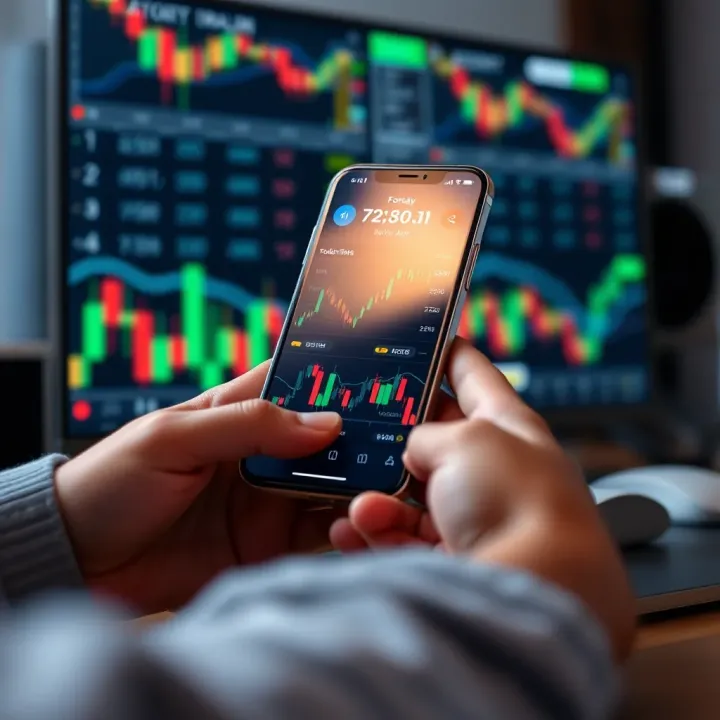
📱 Discover the best forex trading apps in Pakistan! Learn key features, compare top platforms, and understand security & regulations for confident trading. 🇵🇰
Based on 5 reviews