

Choosing the Best Trading App in Pakistan
Looking for the best trading app in Pakistan? 📱 Explore top features, security tips, and compare popular apps to fit your trading style and experience level.
Edited By
Daniel Morgan
Forex trading has grown steadily in Pakistan with more traders eager to tap into the foreign exchange market. The forex market operates 24/7 and involves the buying and selling of currencies, making it one of the largest and most liquid financial markets worldwide. For Pakistanis, forex trading offers a chance to diversify investments beyond local stocks or real estate.
However, the journey isn’t straightforward. Pakistan’s regulatory environment, led by the State Bank of Pakistan (SBP), has strict guidelines on currency trading and foreign exchange dealings. Many traders face issues with access to international trading platforms due to restrictions on money transfers and stringent rules on remittances.
Local brokers that facilitate forex trading must be authorised by the SBP or recognised financial authorities. Traders should verify this before committing funds. Using reliable and regulated platforms protects from scams and ensures smoother transactions.
Besides regulations, forex traders in Pakistan also contend with currency volatility, political uncertainty, and occasional liquidity problems, especially when PKR fluctuates sharply against the US dollar or other major currencies. Still, informed traders can navigate these challenges by adopting sound strategies and keeping an eye on global and domestic economic indicators.
For anyone considering forex trading in Pakistan, understanding the legal framework and choosing the right platform are key first steps to avoid pitfalls.
Some practical tips to start trading in Pakistan include:
Confirm the broker is licensed by SBP or a relevant authority.
Use platforms that support PKR deposits and withdrawals efficiently.
Stay updated with SBP’s foreign exchange policies and any related advisories.
Keep track of currency pairs most relevant to Pakistan’s trade, such as USD/PKR, EUR/PKR, and CNY/PKR.
This guide will unpack these points further, helping you trade wisely and stay compliant with Pakistani laws.
Forex trading has grown steadily in Pakistan as more people look for ways to invest and earn through the currency market. This section explains what forex trading is and why it attracts many Pakistanis. Understanding these basics is essential before diving deeper into the local regulations, broker selection, and trading strategies.
Pakistan’s economic situation often leads people to seek alternative sources of income. Forex trading provides an opportunity to capitalise on currency price fluctuations, which occur daily due to global economic shifts. For example, a trader might buy US dollars when the rupee is relatively strong and sell when the rupee weakens, aiming for a profit from the exchange rate change.
Forex trading refers to the buying and selling of currencies on the foreign exchange market. Unlike stock markets, forex works 24 hours a day, five days a week, making it attractive for traders who want flexibility. The core idea is to exchange one currency for another, expecting favourable price movement.
For instance, a Pakistani trader may speculate on PKR/USD pair — buying US dollars against the Pakistani rupee or selling them depending on market direction. Trades occur in currency pairs, and profits come from correctly predicting if one currency will rise or fall against the other. The forex market's vast liquidity means traders can often enter and exit positions quickly.
Pakistanis turn to forex trading for several practical reasons:
Access to global markets: Unlike investing only in Pakistan Stock Exchange (PSX), forex offers exposure to international currencies like the US dollar, euro, and Japanese yen.
Potential for profit in fluctuating currency conditions: The Pakistani rupee experiences frequent ups and downs due to political issues, trade deficits, and external debt payments, creating opportunities for savvy traders.
Ease of entry: With platforms like MetaTrader, traders can start with relatively small amounts (sometimes as low as $100) and trade from home using a smartphone or laptop.
Leverage availability: Brokers offer leverage, allowing traders to control larger positions with smaller capital, though this carries higher risk.
Many Pakistanis find forex trading a way to supplement income or diversify their investments. However, it requires discipline, knowledge of market behaviour, and awareness of the local legal framework.
By grasping these basics, Pakistani traders can avoid pitfalls and develop realistic expectations. This foundation prepares them for understanding how the State Bank of Pakistan regulates forex activities, which brokers are trustworthy, and which strategies suit local conditions best.
Understanding the legal and regulatory framework is essential for anyone looking to trade forex in Pakistan. This framework ensures the market operates fairly and protects traders from scams or illegal activities. For Pakistani traders, knowing how the laws work can prevent problems such as blocked accounts or legal penalties.
The State Bank of Pakistan (SBP) plays a key role in regulating forex trading. It oversees the country’s foreign exchange reserves and sets rules that banks and financial institutions must follow when dealing with foreign currencies. For instance, SBP restricts the amount individuals can transfer abroad and monitors cross-border currency flows to maintain economic stability. These policies affect how traders can move money and which forex trading activities are allowed within Pakistan.
Pakistan’s foreign exchange regulations are designed to control the flow of foreign currency and maintain the value of the Pakistani Rupee. The Foreign Exchange Regulation Act (FERA) and subsequent rules govern how forex trades and conversions happen. For example, only authorised dealers approved by SBP can legally handle forex transactions. Traders must also be aware that speculative forex trading is largely unregulated locally, meaning many use international brokers outside Pakistan’s jurisdiction. However, wiring profits back home requires compliance with FBR (Federal Board of Revenue) and SBP guidelines to avoid money laundering accusations.
A frequent challenge for forex traders in Pakistan is ensuring compliance with all legal requirements. Issues often arise from inadequate documentation during money transfers, failure to report income from forex profits, or using unapproved brokers. For instance, traders may face challenges while withdrawing profits if their transactions are flagged by banks for verification. Keeping detailed records, such as contracts, account statements, and tax filings, helps avoid freezes on accounts and fines. Traders should consult professionals to ensure they follow KYC (Know Your Customer) norms and declare all forex earnings correctly to FBR.
Successful trading in Pakistan depends not just on strategy but also navigating the legal landscape carefully. Staying updated with SBP directives and foreign exchange laws protects your investments and keeps your operations legit.
By understanding these legal and regulatory aspects, Pakistani forex traders can operate more confidently and reduce risks linked to legal violations or financial losses.
Selecting a trustworthy forex broker is a critical step for anyone serious about trading in Pakistan. A reliable broker ensures your funds are secure, offers a smooth trading experience, and complies with legal regulations, protecting you from scams or unfair trading conditions. Given the growing interest in forex trading among Pakistanis, understanding what to look for can save you significant trouble and increase your chances of success.
A key factor in choosing a broker is whether they hold proper licensing from a recognised financial authority. While Pakistan’s own regulatory framework is evolving, many local traders prefer brokers regulated by internationally respected bodies such as the UK's Financial Conduct Authority (FCA), the Australian Securities and Investments Commission (ASIC), or CySEC in Cyprus. These licences imply the broker adheres to strict standards, including segregating client funds and fair trading practices.
Operating with a regulated broker also makes dispute resolution easier if issues arise. For example, if a Pakistani trader uses an FCA-regulated broker, they might get support from the Financial Ombudsman Service in case of unfair treatment. Unregulated brokers, on the other hand, pose higher risks – once your money is deposited, it may be difficult to recover in case of fraud.
The trading platform is your primary tool for executing trades, so its quality is very important. Popular platforms like MetaTrader 4 (MT4) and MetaTrader 5 (MT5) are preferred because they offer user-friendly interfaces, a range of technical analysis tools, and reliable execution speeds. Also, mobile apps should function smoothly since many Pakistani traders rely on their smartphones due to inconsistent power supply and internet connectivity.
A good trading platform offers real-time price updates, fast order placement, and minimal downtime. For instance, if a broker’s platform frequently lags or crashes during volatile market hours, you could miss important trading opportunities or face losses. Some brokers also provide web-based platforms requiring no download, which is handy for quick access.
Efficient customer service can make or break your trading experience, especially when you face technical issues or have questions about your account. Look for brokers providing prompt support via multiple channels such as live chat, phone, and email. Preferably, customer service should be available during Pakistan’s trading hours and able to communicate clearly in English and Urdu.
Take note of brokers that offer educational resources and timely market updates as part of their service. For example, a broker who responds quickly to withdrawal requests and explains fees clearly will earn higher trust. On the contrary, poor communication and delayed responses can leave you stuck and frustrated, putting your funds at risk.
Many brokers accept Pakistani traders, but the choice depends on their regulatory status, platform quality, and service. Brokers like XM, IG, and Forex.com are popular due to their strong regulation and robust platforms. Meanwhile, some smaller brokers offer localised payment options, including JazzCash and Easypaisa compatibility, which simplify deposits and withdrawals.
It’s always wise to read reviews and verify the broker’s status on watchdog sites before opening an account. Pakistani traders should also check if the broker provides the option to trade in PKR or offers convenient currency conversion to avoid extra charges.
Choosing the right broker affects your trading safety, costs, and overall experience – always prioritise reliability and transparency.
In short, take your time to research and shortlist brokers based on licensing, platform performance, and customer service. This careful approach helps you build confidence and trade effectively in Pakistan’s forex market.
Successful forex trading in Pakistan hinges on understanding effective strategies and managing risks wisely. Traders who rely solely on guesswork often face heavy losses. That’s why clear strategies paired with disciplined risk management can protect your capital and improve your chances of profit over time.
Technical analysis is the art of interpreting price charts to predict future currency movements. Many Pakistani traders use tools like moving averages, support and resistance levels, and candlestick patterns. For example, a trader might spot a "double bottom" pattern on the USD/PKR chart, suggesting a potential price rise. Technical analysis is especially useful for short-term trading and helps traders time entries and exits without considering economic news every time.
Charts and indicators do not guarantee success, but they provide a structured way to analyse market behaviour. Using MetaTrader or TradingView, popular platforms in Pakistan, traders track indicators such as RSI or MACD to identify overbought or oversold conditions. This approach suits those who have limited time to follow global economic news but can regularly monitor price movements.
Fundamental analysis focuses on economic indicators, central bank policies, and geopolitical events impacting currency values. For Pakistani traders, keeping an eye on the State Bank of Pakistan’s interest rate decisions or the country’s trade balance can guide trading choices.
For instance, an unexpected rise in Pakistan’s inflation rate might weaken the rupee against the dollar. Traders using fundamental analysis might sell PKR/USD based on this data. This strategy demands keeping track of news, economic reports, and sometimes global events like US Federal Reserve announcements, since USD pairs dominate forex trading.
Using stop loss orders limits losses by closing a trade automatically if the price moves unfavourably. Say you buy EUR/USD at 1.1000; placing a stop loss at 1.0950 means the trade will close if the price drops 50 pips, preventing a bigger loss. Similarly, take profit orders secure gains by closing trades once a predefined target price is reached.
These tools free traders from watching the market constantly and enforce discipline, which many beginners lack. In Pakistan’s volatile economic environment, where sudden news can swing prices, well-set stop loss orders shield your investment.
Leverage lets you control a large position with a small amount of capital, but over-leveraging can wipe out accounts quickly. Many Pakistani traders are tempted by high leverage, sometimes offered up to 1:500 by brokers. However, using too much leverage amplifies losses just as much as gains.
Practically, keeping leverage between 1:10 and 1:30 is safer. This means for every Rs 10,000 you invest, you control Rs 100,000 to Rs 300,000 in the market. Staying within this range helps manage volatility and prevents margin calls. Always calculate how much you are risking on each trade—never risk more than 1-2% of your account in any single position.
Smart forex trading in Pakistan requires blending strategy with tight risk management. Without both, any profit is vulnerable to sudden market swings or errors in judgement.
Adopting these basic principles will help you navigate Pakistan's forex market more confidently and sustainably.
Forex trading in Pakistan offers both significant challenges and promising opportunities. Understanding these elements is key to navigating the local market effectively. This section covers how economic factors influence currency fluctuations, the common pitfalls related to scams, and where growth is likely in the Pakistani forex scene.
The Pakistani rupee’s fluctuating value plays a direct role in forex trading outcomes. Political uncertainty, trade deficits, and external debt repayments often cause rapid swings in the exchange rate. For example, during times of political unrest or budget shortfalls, the rupee can depreciate sharply against the US dollar, affecting traders’ strategies and results.
Additionally, factors like the State Bank of Pakistan’s policy rate changes and the country’s export-import balance influence forex market conditions. Traders need to keep a close eye on macroeconomic announcements, especially those concerning inflation figures and SBP monetary policy, as these impact currency strength. For instance, rising inflation typically pressures the rupee downward, presenting both risk and opportunity for traders adopting short or long positions.
The rise in online forex trading has unfortunately attracted scam operators targeting inexperienced traders. Fake brokers promising guaranteed profits or using high-pressure sales tactics have caused losses worth lakhs or even crores for individuals.
Common scam signs include unlicensed brokers without State Bank approval or Pakistan Telecommunication Authority (PTA) recognition, unrealistic promises, and poor customer service. Cases where traders receive no access to withdrawals or platform failures are too frequent. Traders should verify broker credentials thoroughly and avoid platforms asking for hefty upfront deposits without transparent terms.
Always check licence and regulation status before trading. Using SECP and SBP resources can help spot legitimate brokers.
Despite challenges, Pakistan’s forex trading sector has growth potential. Increasing internet penetration and mobile usage make online trading accessible even in smaller cities and towns. Localised educational content in Urdu and regional languages is emerging, helping new traders build skills safely.
Moreover, with growing awareness of global markets, more Pakistanis are diversifying investments beyond traditional assets. This shift boosts demand for better trading platforms and services tailored to Pakistani needs.
Regulatory improvements and tighter monitoring can also enhance market confidence. For example, the SECP’s efforts to regulate digital financial services suggest that forex trading might see better safeguards and transparency soon.
The combination of these factors indicates that while the forex market in Pakistan is not without risks, informed traders can tap into promising opportunities by staying alert to economic signals and choosing trustworthy platforms carefully.
Looking for the best trading app in Pakistan? 📱 Explore top features, security tips, and compare popular apps to fit your trading style and experience level.
Looking for the best forex trading platform in Pakistan? Discover key features, security, costs, tools, and support to pick the right fit for you 📈💼
Find the best forex trading platform in Pakistan 🇵🇰 with our clear guide! Compare brokers, explore key features, and trade confidently today 📈💼
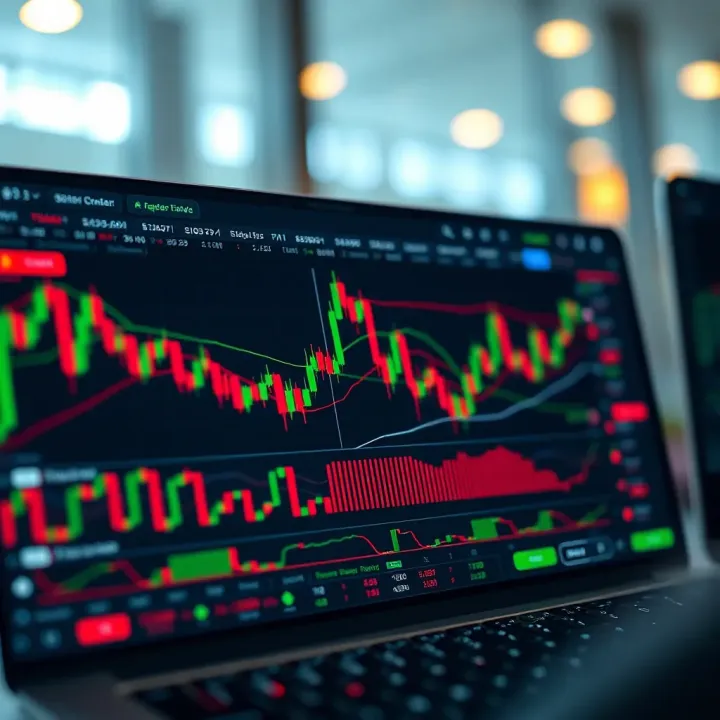
Looking for the best forex trading app in Pakistan? Discover top choices, security tips, and how to trade safely for a reliable experience 📈🇵🇰
Based on 10 reviews