
Best Trading Apps for Beginners in Pakistan
Explore top trading apps for beginners in Pakistan 🇵🇰. Learn key features, ease of use, and regulations to find your perfect start in the trading world 📱💹.
Edited By
Emma Richardson
Forex trading, or foreign exchange trading, is the act of buying and selling currencies to make a profit. The forex market is the largest financial market worldwide, with trillions of dollars traded daily. In Pakistan, interest in forex trading is growing as many seek alternative income sources beyond traditional avenues.
Understanding how forex works is key before jumping in. At its core, forex involves trading currency pairs like USD/PKR or EUR/USD. You buy one currency while selling another, aiming to benefit from changes in exchange rates. Unlike stocks, the forex market runs 24 hours a day, five days a week, allowing traders to participate anytime from Karachi to Islamabad.
Successful forex trading depends on knowledge of market terms, timing, and risk management.
Here are some basic terms you need to know:
Pip: The smallest price move a currency can make, often 0.0001 for most pairs.
Lot: The trade size; a standard lot equals 100,000 units of currency.
Leverage: Using borrowed capital to increase potential returns (and risks).
Spread: The difference between the buy (ask) and sell (bid) price.
Before starting, it's important to pick a reliable broker. Look for ones regulated by the Securities and Exchange Commission of Pakistan (SECP) or those known internationally for transparency. Also, setting up a trading account requires CNIC verification and linking with Pakistani bank accounts or payment platforms like JazzCash or Easypaisa for deposits and withdrawals.
Most beginners should start with demo accounts to practice without risking real money. Once comfortable, you can explore simple strategies such as trend following or breakout trading. Careful risk management, like setting stop-loss orders, helps protect your capital during market swings.
In short, forex trading offers chances to grow your money but requires patience, discipline, and continuous learning. This article will walk you through each step, providing practical tips suitable for traders based in Pakistan.
To start any trading journey, especially in the forex market, having a solid grasp of the basics is non-negotiable. This foundation helps traders understand how currency markets operate, the terms they’ll encounter, and how to interpret movements effectively. For example, knowing what a currency pair represents or how leverage works can save you from costly mistakes.
Forex trading refers to the buying and selling of currencies against each other. It is the largest financial market globally, operating 24 hours from Monday to Friday. When you trade forex, you speculate on whether one currency’s value will rise or fall compared to another. For instance, if you think the US dollar will strengthen against the Pakistani rupee, you may buy the USD/PKR pair.
Currencies are always traded in pairs, such as USD/PKR or EUR/USD. The first currency is the base, and the second is the quote currency. The price tells you how much of the quote currency one unit of the base currency costs. Understanding this is practical when you want to predict or react to market changes. Traders in Pakistan might commonly deal with pairs involving PKR or major global currencies, depending on their broker.
A pip is the smallest price move in a currency pair, usually 0.0001 for most pairs. In practical terms, it measures how much profit or loss you make with each price change. Lots describe trade size; a standard lot is 100,000 units of the base currency. For new traders, starting with mini or micro lots helps manage risk without overcommitting capital.
Leverage allows you to control a large trade size with a smaller deposit called margin. If you use 1:100 leverage, Rs 1,000 can control Rs 100,000 worth of currency. While this increases buying power, it also magnifies losses, so using leverage sensibly and knowing your margin requirements is crucial.
The spread is the difference between the buying (ask) and selling (bid) price set by your broker. This cost affects your break-even point. Some brokers also charge commissions on trades, particularly for popular pairs or platforms. Choosing a broker with low spreads and transparent fees helps reduce trading costs.
Forex involves various players: central banks, commercial banks, hedge funds, retail traders, and corporations. Each has different motives—central banks might aim to stabilise currency, while traders seek profits. Understanding who influences the market helps predict possible price swings.
The forex market runs across four major sessions: Sydney, Tokyo, London, and New York. Each session has its own trading volume and volatility patterns. For example, the London session often shows higher activity, which suits traders looking for more movement to make profits.
Pairs like EUR/USD, GBP/USD, USD/JPY, and USD/PKR are called major pairs due to their high liquidity and tight spreads. Depending on your trading style or local context, focusing on these pairs can provide better trading opportunities and easier execution.
Before you begin trading, mastering these basics minimizes surprises and helps you approach the forex market with confidence.
Before diving into forex trading, getting prepared plays a critical role in paving a successful path. Preparation helps you avoid common mistakes often made by beginners, such as choosing the wrong broker or risking too much capital upfront. It also gives you a chance to understand the basic administrative and technical requirements that form the foundation of trading.
Choosing a regulated broker is key for safety and transparency. In Pakistan, the Securities and Exchange Commission of Pakistan (SECP) monitors financial intermediaries, including forex brokers offering services to Pakistani traders. A broker regulated under SECP or recognised international bodies like FCA (UK) or ASIC (Australia) ensures compliance with rules that protect your capital and personal data. Trading with an unregulated broker can expose you to fraud or unfair trading conditions.
Brokers usually offer several account types tailored for different trading styles and capital sizes. For example, a micro account allows novice traders to enter the forex market with low minimum deposits and smaller trade sizes, reducing risk exposure. Standard or ECN accounts suit more experienced traders by offering lower spreads and direct market access. Knowing these account options helps you match your investment capacity and trading goals without over-committing.
The choice of trading platform impacts your trading experience significantly. Popular platforms like MetaTrader 4 (MT4) and MetaTrader 5 (MT5) are widely supported in Pakistan for their user-friendly interfaces and rich charting tools. Some brokers may also offer proprietary platforms that include unique features or better integration with Pakistani payment options like JazzCash or Easypaisa. Pick a platform that works smoothly on your devices and offers the technical tools you need.
Starting with a demo account is the safest way to practise forex trading without risking real money. Demo accounts use virtual funds but mirror live market conditions, helping you understand order execution, test strategies, and get comfortable with your broker’s platform. This builds confidence before you move on to live trading.
To comply with anti-money laundering (AML) and Know Your Customer (KYC) regulations, brokers require submitting valid identification. Typically, you’ll need your Computerised National Identity Card (CNIC), proof of address (like a utility bill), and sometimes a photo. Efficient and accurate document submission speeds up account approval, so gather these documents in advance.
Depositing funds is the final step before you start trading live. Look for brokers supporting convenient and secure methods like bank transfers, credit/debit cards, or local e-wallets such as JazzCash and Easypaisa. Pay attention to minimum deposit requirements and processing times. Some brokers offer no-deposit bonuses or promotions, but always prioritise safety and transaction transparency over tempting offers.
Preparing carefully before starting forex trading can save you from costly errors and create a smoother trading experience.
With the right broker and a properly set up account, you’ll be well-positioned to begin your forex trading journey wisely and confidently.
Understanding how to use trading tools and analysis methods is vital for success in forex trading. These tools help you make informed decisions by interpreting market data effectively. In Pakistan's fast-moving markets, without grasping these essentials, traders risk relying on guesswork rather than facts, which can lead to losses.
Charts offer a visual representation of price movements over time, making it easier to identify market trends. For example, candlestick charts are popular because they display opening, closing, high, and low prices in a compact form. Knowing how to read them helps you spot when a currency pair like USD/PKR is starting to rise or fall.
Indicators such as Moving Averages or Relative Strength Index (RSI) give additional context beyond what charts show. These tools summarise recent price behaviour or momentum. For instance, an RSI value above 70 might suggest a currency is overbought and due for a correction. This insight can guide your buy or sell decisions.
Certain price patterns often repeat, signalling possible future moves. Patterns like Head and Shoulders or Double Tops can warn you of potential reversals. Spotting these can save you from entering trades at the wrong time and help you plan exits or entries with more confidence.
Economic releases such as Pakistan’s GDP growth rate, inflation numbers, or unemployment figures affect currency values directly. When inflation rises quickly, the central bank might increase interest rates, strengthening the rupee. Staying updated with this data helps traders anticipate market reactions.
Central banks in Pakistan and abroad influence forex markets by adjusting monetary policy. For example, a decision by the State Bank of Pakistan (SBP) to change the policy rate can cause swift moves in the market. Understanding these roles helps traders interpret why prices jump or fall suddenly.
Beyond regular reports, geopolitical events, government budget announcements, or international trade talks can impact currency prices. For instance, news about Pakistan’s trade balance or remittance inflows can move the PKR sharply. Keeping an eye on relevant news ensures you’re not caught off-guard by sudden market swings.
Mastering both technical and fundamental analysis tools increases your chances of making smarter trades and managing risks better. Practical use of these techniques turns raw market data into actionable trading strategies.
A clear trading strategy is essential for success in the forex market. It guides your decision-making, helping you know when to enter or exit trades, manage risk, and stay disciplined. Without a strategy, trading can feel like guesswork, increasing the chances of losses. For Pakistani traders dealing with volatile currency pairs like USD/PKR or EUR/USD, having a plan is the difference between consistent profits and unexpected setbacks.
Scalping involves making many quick trades to capture small price movements, holding positions for only a few seconds or minutes. This style suits traders who can devote full attention to the screen and can react swiftly. For example, during overlapping London and New York sessions, high liquidity allows scalpers to benefit from tight spreads and quick market moves. However, scalping demands strict discipline and a fast internet connection, which could be challenging in places with unstable networks.
Day trading means opening and closing trades within the same day, avoiding overnight risk. Traders watch price trends closely during major sessions, such as the London or New York market hours. This style fits those who prefer to analyse charts for a few hours daily instead of constant monitoring. For instance, during economic announcements like the SBP monetary policy statement, a day trader might take advantage of sharp market reactions without holding the position beyond market close.
Swing trading focuses on capturing price moves lasting several days or weeks. It relies more on technical indicators and fundamental analysis combined. This style works well for traders who cannot watch markets all day but want to benefit from larger trends. A swing trader in Pakistan might analyse Pakistan's economic news or geopolitical developments and position trades on currency pairs like PKR/USD accordingly. This style requires patience and proper risk controls but offers more flexibility.
Defining clear entry and exit rules helps you know exactly when to buy or sell a currency pair. For example, you may decide to enter a trade when the 50-day moving average crosses above the 200-day moving average and exit when the price hits a resistance level. These rules remove guesswork and emotional reactions, making your trading systematic and objective.
A risk-reward ratio compares potential profit to possible loss in a trade. A typical ratio is 1:2, meaning you aim to make twice as much as you risk. For instance, if you risk Rs 5,000 on a trade, your target should be at least Rs 10,000. Maintaining favourable ratios ensures your winners compensate for losers, helping steady growth of your trading account.
Stop loss limits your downside by automatically closing a trade if the market moves against you beyond a certain point. Take profit locks gains by closing a trade when targets are reached. Suppose you buy EUR/USD at 1.0900 and set stop loss at 1.0850 and take profit at 1.1000. This approach keeps losses manageable and profits secured without constant monitoring. It’s vital for traders in Pakistan where market gaps or volatile news can lead to unexpected swings.
Building and following a well-defined trading strategy will not only protect your capital but also help you trade confidently in the ever-changing forex market.
Managing risk and emotions is a fundamental part of successful forex trading. Without a clear approach to risk, even the best strategies can lead to heavy losses, while unchecked emotions may cause poor decision-making. Pakistani traders, especially beginners, will find controlling these two factors crucial in building confidence and protecting their capital.
Position sizing means deciding how much of your trading capital to risk in each trade. For example, if you have Rs 100,000 in your account, risking 1-2% per trade means you would only risk Rs 1,000 to Rs 2,000 on that position. This prevents a single loss from wiping out your account and allows you to stay in the game longer. Position sizing also depends on your stop loss and the currency pair's volatility. Using fixed percentages, rather than arbitrary amounts, brings discipline and steadiness to trading.
A stop loss order automatically closes your position when the price moves unfavourably to a predetermined level. This tool helps protect your capital by limiting losses. For example, if you buy EUR/USD at 1.1000 and set a stop loss at 1.0950, your position will close if the price drops 50 pips, preventing further loss. Stop losses are essential in volatile markets like forex, as price swings can be sharp. Many Pakistani traders sometimes skip stop losses hoping the market will turn back, but this often results in bigger losses.
Diversifying your trades involves spreading your capital across different currency pairs or asset classes. Instead of putting all funds into USD/PKR or GBP/USD, you can include pairs like EUR/USD or USD/JPY. This balances the risk since not all pairs move the same way during economic events. For instance, if USD is weakening due to domestic data, some currencies might still strengthen. Diversification reduces the impact of losses from any single trade and smooths overall performance.
Emotions like fear, greed, and hope can cloud judgement during trading. Fear might cause premature exits, while greed leads to holding losing trades longer than necessary. Suppose a trader in Karachi sees a quick profit and holds on, hoping for more, only to lose it all. Practising emotional control means sticking to your plan and avoiding impulsive decisions. Some find journaling trades or following strict rules helps manage emotions better.
Overtrading means taking too many trades or increasing trade sizes to recover losses quickly. This often leads to exhaustion and more errors. A trader may start with Rs 50,000 and lose confidence, then open excessive positions to win back money, ending deeper in trouble. Setting daily or weekly trade limits helps prevent this. Quality over quantity should be the motto; waiting for meaningful setups saves money and preserves mental energy.
Discipline is about following your trading plan consistently, even during streaks of loss or gain. It means sticking to your risk rules, stop losses, and strategy without second guessing. For example, if your plan says to exit a trade at a certain loss level but you hesitate due to hope, you break discipline. Over time, disciplined traders build steady profits, while those lacking it face random outcomes. Pakistani traders can benefit by treating forex like a business, not gambling.
Effective risk and emotion management doesn't just protect your money; it shapes your long-term success. Start by defining your limits and sticking to them, no matter how tempting it is to stray.
By focusing on these risk and psychological principles, you lay the groundwork to trade forex in Pakistan confidently and sustainably.
Explore top trading apps for beginners in Pakistan 🇵🇰. Learn key features, ease of use, and regulations to find your perfect start in the trading world 📱💹.
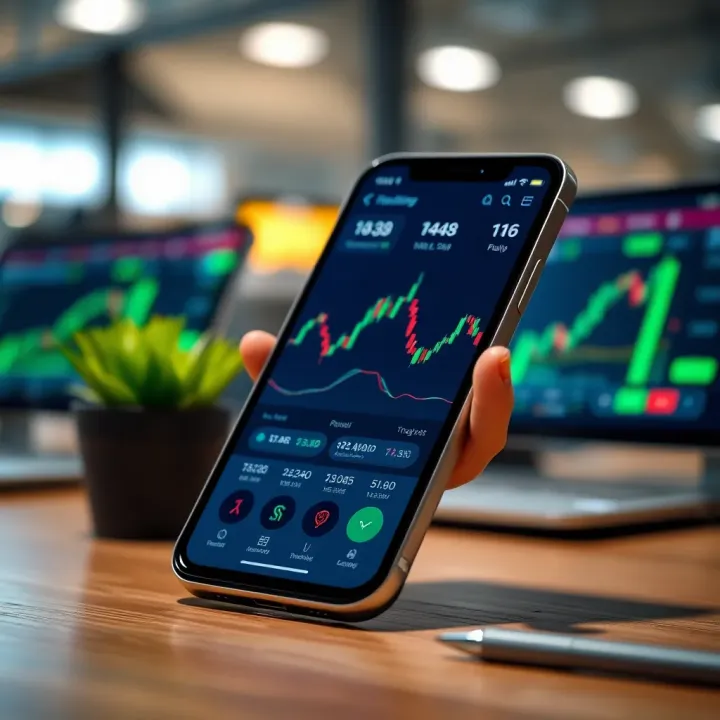
📱 New to trading in Pakistan? Discover top trading apps with user-friendly features, secure transactions, and affordable costs to start your mobile trading today!
Find the best forex trading platform in Pakistan 🇵🇰 with our clear guide! Compare brokers, explore key features, and trade confidently today 📈💼
Looking for the best forex trading app in Pakistan? Discover top choices, security tips, and how to trade safely for a reliable experience 📈🇵🇰
Based on 8 reviews