
Choosing the Best Forex Trading Platform in Pakistan
Looking for the best forex trading platform in Pakistan? Discover key features, security, costs, tools, and support to pick the right fit for you 📈💼
Edited By
Oliver Preston
Forex trading opens doors for individuals to engage with the global currency market directly. For Pakistani traders, this market offers an opportunity to diversify income sources beyond traditional investments like stocks or real estate. However, the forex market is complex and demands a clear understanding to trade effectively.
This guide focuses on providing practical steps tailored for beginners in Pakistan who want to learn forex trading with confidence. You'll find clear definitions, tips on choosing brokers regulated for Pakistani users, and advice on managing risks within our local economic context.
Understanding forex basics is the first step: it involves the exchange of one currency for another with the goal of profiting from changes in exchange rates. For example, buying USD against PKR when the rupee weakens can turn profitable once the dollar strengthens.
Since forex trading involves leverage and high volatility, managing risk becomes essential. We will explore strategies that help balance potential gains and losses practically.
Moreover, this guide looks at relevant local tools such as Easypaisa and JazzCash, which can facilitate deposits and withdrawals effectively, offering convenience for Pakistani traders.
Starting forex trading without proper knowledge is like stepping into Karachi traffic blindfolded — risky and unwise. Equip yourself with the right knowledge and tools first.
The aim is to help you build a solid foundation and avoid common pitfalls by blending global forex principles with the specifics of Pakistan’s financial ecosystem. With steady learning and disciplined practice, forex trading can become a viable addition to your investment portfolio.
Grasping the basics of forex trading is the first step towards becoming a competent trader. Without understanding fundamental concepts, you risk making uninformed decisions that could lead to significant losses. This section breaks down the core elements of forex trading, helping you build a solid foundation to approach the markets with confidence.
Forex trading, short for foreign exchange trading, means buying and selling currencies to profit from their changing values. Think of it as exchanging one currency for another at the current market rate, hoping the rate moves in your favour later. For example, if you believe the US dollar will strengthen against the Pakistani rupee, you buy USD/PKR. When the dollar gains value, you sell it back to make a profit.
The primary purpose is speculation but also hedging. Businesses use forex trading to protect themselves against currency fluctuations in international deals. Retail traders, like many in Pakistan, take small positions hoping to earn from short-term price moves.
Currencies are always quoted in pairs, such as USD/PKR or EUR/USD. The first currency is called the 'base currency' and the second the 'quote currency'. When you see USD/PKR at 280, it means one US dollar costs 280 Pakistani rupees.
Trading involves buying one currency and simultaneously selling the other. For instance, if you expect the Pakistani rupee to weaken, you might sell PKR and buy USD. Later, if the rate shifts to 285, you can sell your US dollars and buy rupees back at a better rate, earning from the difference.
A pip is the smallest price move a currency pair can make, usually the fourth decimal place (0.0001). For example, if USD/PKR moves from 280.0000 to 280.0100, that's 10 pips.
A lot is the standard size of a trade, often 100,000 units of the base currency in a standard account. Beginners often start with mini or micro lots, which are smaller and reduce risk.
The spread is the difference between the bid price (selling price) and the ask price (buying price). This cost influences your profitability, so brokers with lower spreads are usually better.
Leverage lets you control a large trade size with a small amount of money. For example, with 1:100 leverage, Rs 10,000 can control Rs 1,000,000 worth of currency. While leverage can boost profits, it also magnifies losses, so use it carefully.
The bid price is what buyers are willing to pay for a currency pair, while the ask price is what sellers want. The broker shows these two prices—the difference being the spread. For example, if EUR/USD bid is 1.1000 and ask is 1.1003, the spread is 3 pips.
Understanding these helps you decide entry and exit points. If you buy at the ask price, you’ll sell later at the bid price. A narrow spread means less cost to enter the trade.
Stop loss is a preset order to exit a trade automatically if the price moves against you past a certain point. This prevents large losses. For example, if you buy USD/PKR at 280 and set a stop loss at 278, your trade will close if the price falls to 278.
Take profit works similarly but locks in profits when the price reaches your target. Suppose you expect USD/PKR to rise to 285, setting a take profit there means your trade closes automatically once it hits 285, securing gains without watching the market all the time.
Knowing and using stop loss and take profit orders is essential—it's your safety net against unexpected market swings.
Mastering these basics sets the stage for effective forex trading. It helps you understand what’s happening behind the charts and why prices move. This way, you approach trading with practical awareness rather than guesswork.
Choosing the right forex broker in Pakistan directly affects your trading success and security. A reliable broker provides a fair trading environment, secure transactions, and access to proper tools. In contrast, a poor choice can lead to unnecessary risks, hidden costs, or even fraud. Knowing what to look for helps you avoid pitfalls and builds confidence as you learn forex trading.
The Securities and Exchange Commission of Pakistan (SECP) regulates financial markets including forex brokers operating in Pakistan. SECP approval confirms that a broker follows local laws designed to protect traders from scams and unfair practices. Trading through SECP-registered brokers ensures your funds are safeguarded and complaints can be addressed through official channels. For example, a broker without SECP approval might delay withdrawals or change terms abruptly, so checking this status is a practical first step.
Besides SECP, many brokers hold licences from international bodies like FCA (UK) or CySEC (Cyprus). These add layers of oversight and usually higher compliance standards. Pakistani traders should research brokers’ histories by reading user reviews, industry reports, and complaints. Forums and social media can reveal red flags such as frequent withdrawal issues or server downtimes. Always verify licences on official regulator websites to make sure the broker is legitimate, avoiding cases where shady operators use fake credentials.
MetaTrader 4 (MT4) and MetaTrader 5 (MT5) are the most common platforms among Pakistani forex traders due to their user-friendly interfaces, advanced charting tools, and automated trading options. These platforms let you analyse price trends and execute trades efficiently. Choosing a broker that supports MT4/MT5 means you get access to community-developed plugins, indicators, and expert advisers which can support your learning and strategy development.
Brokers offer various account types catering to beginners and professionals alike. Some accounts require lower minimum deposits (Rs 10,000–Rs 50,000), making entry affordable for new Pakistani traders. Others have higher thresholds but provide perks like tighter spreads or dedicated account managers. Assessing these options helps you pick an account that suits your budget and trading goals without overstretching finances.
Costs eat into your trading profits. Brokers generally charge through spreads (difference between buying and selling price), commissions per trade, or rollover fees for holding positions overnight. For instance, some brokers might offer zero commission but wider spreads, while others charge a fixed commission with tighter spreads. Pakistani traders should read the fine print, as rollover fees are usually overlooked yet can add up if positions are held longer.
Small differences in fees matter, especially when trading frequently or in small sizes. A spread of just 2 pips compared to 1 pip halves your transaction cost, impacting your net earnings over time. Carefully comparing fee structures allows you to maximise your profit margin, which is essential when your capital is limited. Consider brokers whose costs align with your trading style—day traders require low spreads, while long-term traders focus on rollover fees.
Selecting a trustworthy, affordable broker with the right platform and account setup forms the backbone of successful forex trading in Pakistan. Spend time vetting these elements before starting real trades to avoid costly mistakes.
Gaining solid knowledge in forex trading is the backbone of becoming a successful trader. In Pakistan, where forex markets can be volatile, understanding the tools and strategies helps you make informed choices rather than gambling with your hard-earned money. Good trading knowledge reduces costly mistakes and builds your confidence to handle fluctuating markets effectively.
It helps to have reliable websites and courses to guide you through the basics and beyond. Websites like Babypips offer free, easy-to-follow tutorials that cover essential forex concepts from scratch. Local platforms sometimes provide Urdu or regional language content which makes learning smoother for many Pakistani traders. Structured online courses, whether free or paid, help organise your learning process and often include quizzes, webinars, or community forums to discuss ideas.
Books and video tutorials also serve as handy tools for learning forex trading. Books such as "Currency Trading for Dummies" or "Forex for Beginners" offer step-by-step guidance while explaining complex terms in simple language. Video tutorials from popular Pakistani YouTubers can show live trading examples, helping you grasp chart reading and trade execution faster. Combining reading with visual explanations usually gives clearer understanding.
Demo trading plays a crucial role before risking real money. It helps you apply learned concepts without financial consequences, making it easier to test strategies under real market conditions. Many brokers in Pakistan offer demo accounts where you trade virtual funds but face real-time price changes.
To use demo accounts effectively, treat them like actual trading sessions. Avoid the mindset that losses don’t matter because the money is virtual. Practice entering and exiting trades, managing stop losses, and using charts to build discipline. Once you regularly make profits on demo accounts, you'll be better prepared for live trading.
Trend following and range trading are two straightforward strategies commonly used by beginners. Trend following involves identifying the market direction—uptrend or downtrend—and taking trades in that direction to ride the wave. For example, buying USD/PKR when the trend is upward can yield steady profits.
Range trading is useful when the market is moving sideways, bouncing between support and resistance levels. Here, you buy near the support and sell near resistance, expecting the price to stay within this channel. Both strategies simplify decision-making and suit traders who start without complex tools.
Using technical and fundamental analysis together enhances your trading edge. Technical analysis involves studying price charts, patterns, and indicators like moving averages or RSI to predict future moves. Fundamental analysis looks at economic events affecting currencies, such as Pakistan’s inflation rate, State Bank policies, or political developments. For instance, a rise in SBP's policy rate might strengthen the Pakistani rupee, influencing your trade entries.
Getting your forex knowledge right saves you from costly errors and gives you tools to spot opportunities confidently.
Building a disciplined approach through learning will help you navigate the forex market’s ups and downs steadily, especially as a beginner in Pakistan’s trading scene.
Forex trading, especially for beginners, demands a disciplined approach and careful risk management. Without these, even a promising strategy can falter. Managing risks helps protect your capital from unexpected market moves, while discipline ensures you stick to your plan despite emotional ups and downs. Pakistani traders often face challenges like volatile markets and sudden economic news, making risk management not just advisable but essential.
Setting stop loss is a vital tool to limit losses. It’s an instruction to close your trade once the price reaches a certain level against your position. For example, if you buy USD/PKR at Rs 280 and set a stop loss at Rs 277, your trade will automatically close if the price drops to Rs 277, capping your loss. This prevents you from losing more than you planned, especially when the market unexpectedly swings.
Proper position sizing means deciding how much money to risk on each trade. Don’t put all your eggs in one basket by risking too large a portion of your account. A common guideline is risking only 1-2% of your trading capital per trade. So, if your trading account has Rs 100,000, you should risk no more than Rs 1,000-Rs 2,000 on a single trade. This helps keep you safe from a string of losses that can quickly drain your funds.
Maintaining a risk-reward ratio ensures every trade has the potential to earn more than you risk. A ratio of 1:3 means you risk Rs 1 to potentially gain Rs 3. If you only make trades where your potential reward is significantly higher than your risk, you can stay profitable even with some losing trades. This method helps in avoiding careless trades that don’t offer enough benefit compared to the downside.
Recording trades and outcomes is like keeping a diary of your trading decisions. You note down entry prices, exit prices, stop losses, reasons for the trade, and the final outcome. This practice helps in spotting patterns over time, whether positive or negative. For example, you might find that your trades based on economic news perform better than those based on technical setups.
Learning from mistakes is one of the biggest benefits of a trading journal. When you review your past trades, you can identify errors like moving stop losses too early or entering trades without confirmation. Over time, this feedback loop makes you a sharper trader, reducing repeated mistakes and improving results.
Keeping a detailed record builds self-awareness and makes your trading approach more scientific and less emotional.
Avoiding impulsive decisions keeps you from chasing quick profits or exiting trades early out of fear. The forex market can be stressful, especially during volatile times like Pakistan’s budget announcements or geopolitical tensions. When emotions run high, traders often make rash moves that wipe out profits or increase losses.
Sticking to your plan means following your strategy even when the market behaves unexpectedly. If your plan says to wait for confirmation before entering a trade, don’t jump in because of tips from social media or hearsay chai-sessions. Patience allows profitable trades to develop fully and avoids costly premature actions.
Managing risks and discipline go hand in hand. Without them, even good strategies don’t last long. By setting stops, sizing positions carefully, keeping a journal, and controlling emotions, you build a strong foundation to trade forex successfully in Pakistan’s challenging market.
Staying current with market developments and using tools tailored to Pakistan's context is vital for any forex trader. Local financial news offers timely insights that global sources may miss, while Pakistani economic indicators directly affect currency movements relevant to traders here. Moreover, understanding available payment options and the legal framework ensures smoother trading experiences and compliance.
Reliable sources for forex news in Pakistan include well-established financial newspapers such as Dawn Business and online portals like Pakistan Today’s Profit section. These outlets provide daily updates on global and local market trends, including currency movements and policy changes. For instance, SECP (Securities and Exchange Commission of Pakistan) announcements and State Bank of Pakistan’s monetary policies are regularly covered, helping traders gauge market sentiment accurately. Following these sources helps you react promptly, especially when there are sudden changes impacting the rupee or PKR pairs.
Pakistani economic indicators, such as inflation rates, trade balance figures, and foreign exchange reserves, influence forex prices significantly. For example, if the inflation rate hints at potential interest rate adjustments by the State Bank of Pakistan, traders can anticipate currency volatility. Similarly, data on remittances or exports can affect the PKR's strength against the dollar, making it essential for traders to keep an eye on official releases from the Pakistan Bureau of Statistics or State Bank reports.
Most Pakistani forex brokers offer local payment options including JazzCash, Easypaisa, and direct bank transfers from the country’s major banks like HBL, UBL, and MCB. These methods allow quick and cost-effective deposits and withdrawals without the hassle of currency conversion or high transaction fees. For example, JazzCash and Easypaisa are widely used due to their convenience and accessibility, especially for smaller trades or frequent transfers.
When it comes to withdrawing profits, security should be your top concern. Always use verified banking channels or payment apps endorsed by the broker. Many traders prefer withdrawing via bank transfer to maintain a clear audit trail, which is helpful during tax filings. Double-check withdrawal limits and processing times to avoid surprises. If using mobile wallets, confirm that the broker complies with Pakistan Telecommunication Authority (PTA) regulations to protect against fraud.
The Federal Board of Revenue (FBR) requires reporting of income earned from forex trading. This includes profits from both local and international brokers. FBR guidelines clarify that forex earnings are taxable under capital gains or income tax provisions, depending on the nature of your trading activity. Keeping detailed records of transactions and profits makes it easier to comply with FBR requirements and avoid penalties.
Filing tax returns properly involves declaring forex income in your annual income tax statement. Many traders overlook this step, which can lead to complications during tax assessments. Using accredited tax consultants or software that recognises forex trading income can simplify the process. Remember to keep proof of all deposits, withdrawals, and broker statements. This documentation supports your claims and ensures smooth dealings with tax authorities.
Staying up-to-date with local market news, using trusted Pakistani payment options, and understanding tax rules together build a solid foundation for successful and legally compliant forex trading in Pakistan.
Looking for the best forex trading platform in Pakistan? Discover key features, security, costs, tools, and support to pick the right fit for you 📈💼
Find the best forex trading platform in Pakistan 🇵🇰 with our clear guide! Compare brokers, explore key features, and trade confidently today 📈💼
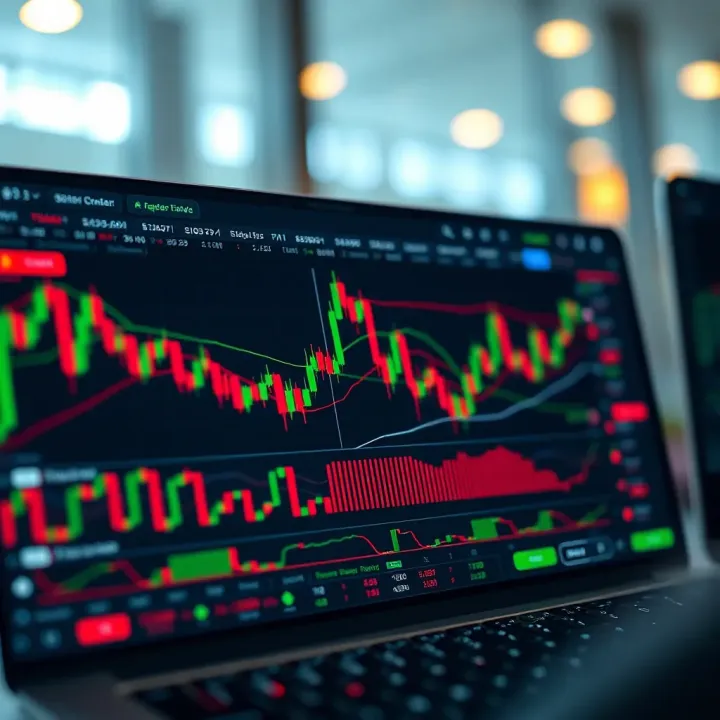
Looking for the best forex trading app in Pakistan? Discover top choices, security tips, and how to trade safely for a reliable experience 📈🇵🇰

📱 Discover the best forex trading apps in Pakistan! Learn key features, compare top platforms, and understand security & regulations for confident trading. 🇵🇰
Based on 11 reviews