

Understanding Binary Converters: A Simple Guide
Explore binary converters 🔢: learn how they work, manual & digital methods, common uses, and troubleshooting tips. Perfect for students & tech pros.
Edited By
Henry Thompson
Binary to text converters play a useful role in translating strings of 0s and 1s into readable text. In the digital world, everything stored or sent through computers boils down to binary code—a language computers understand easily but humans find confusing. For traders, analysts, and crypto enthusiasts, grasping these converters offers more than curiosity; it helps in verifying data integrity, decoding encrypted messages, or analysing technical signals.
The basics lie in understanding how computers use 8-bit chunks, called bytes, to represent characters. For instance, the binary code 01000001 corresponds to the letter A in ASCII (American Standard Code for Information Interchange). Learning to convert such codes manually gives you insight into the underlying operation of digital communications, which can be valuable when handling complex reports or tech-heavy tools.

Being able to convert binary to text empowers you to decode hidden messages or troubleshoot errors in data transmission, a skill that complements financial research and technical forecasting.
Online binary to text converters simplify this process by automatically turning long binary strings into plain English or Urdu text. Such tools save time especially when you receive computer data logs or encrypted market information. Still, knowing the manual steps allows you to verify results independently and appreciate the logic behind the software.
In this article, you will learn:
How binary encoding works with examples relevant to your daily trading and analysis tasks
Manual methods to convert binary data into letters and numbers
Guidance on using popular online converters effectively
Common problems like incorrect conversions and ways to fix them
Mastering these basics helps you understand data flow better and ensures accurate interpretation of digital information, a handy skill when working with automated trading systems or financial algorithms in Pakistan’s tech-driven markets.
Understanding binary is the first step toward grasping how computers handle text and other data. Binary code consists solely of 0s and 1s, representing the two possible states in digital electronics – off and on. Every piece of data, whether text, images, or sound, is ultimately broken down into these simple on/off signals so that computers can process and store information efficiently.
Definition of binary: Binary is a numbering system that uses only two digits: 0 and 1. Unlike the decimal system, which has ten digits (0-9), binary is the foundation of modern computing. Each binary digit, or bit, can represent two distinct values, making it easy for electronic circuits to interpret.
In real life, binary code enables computers to record data without ambiguity. For example, when you type a letter on your keyboard, the computer converts this input into a binary sequence it can work with internally.
Representation of data using 0s and 1s: All forms of digital data are expressed as long streams of zeros and ones. For instance, the letter 'A' in binary is 01000001. These streams are grouped typically in sets of eight bits, called bytes, which facilitate easier handling.
In practical terms, this means your mobile messages, emails, and even stock market data are encoded using binary. Traders analysing algorithmic trading signals deal with data stored and transmitted in binary form, making understanding this representation crucial.
ASCII and Unicode standards: Text encoding standards like ASCII (American Standard Code for Information Interchange) and Unicode define how characters become binary sequences. ASCII uses 7 or 8 bits per character, enough for English letters and basic symbols. However, for languages with a rich set of characters like Urdu or Punjabi, Unicode is essential since it supports thousands of symbols and letters used worldwide.
Pakistanis working with software that processes multi-language data often rely on Unicode to ensure correct display and conversion of text.
Conversion of characters to binary sequences: Each character is assigned a unique number in these standards, which is then converted to a binary code. For example, the Unicode code for 'ز' (zay in Urdu) is U+0632, corresponding to a specific binary sequence.
This conversion allows software to exchange information without confusion. Binary to text converters use such mappings to turn these binary sequences back into readable text, which is particularly helpful for programmers debugging code or analysts working on data imports from different systems.
Knowing the binary basics and text encoding standards helps you interpret data accurately, whether you're translating coded messages or analysing financial datasets stored in electronic formats.
In summary, binary forms the backbone of all text encoding. From simple ASCII letters to complex Unicode characters, the conversion between text and binary enables smooth digital communication, essential for tech-savvy investors and traders handling large volumes of data.
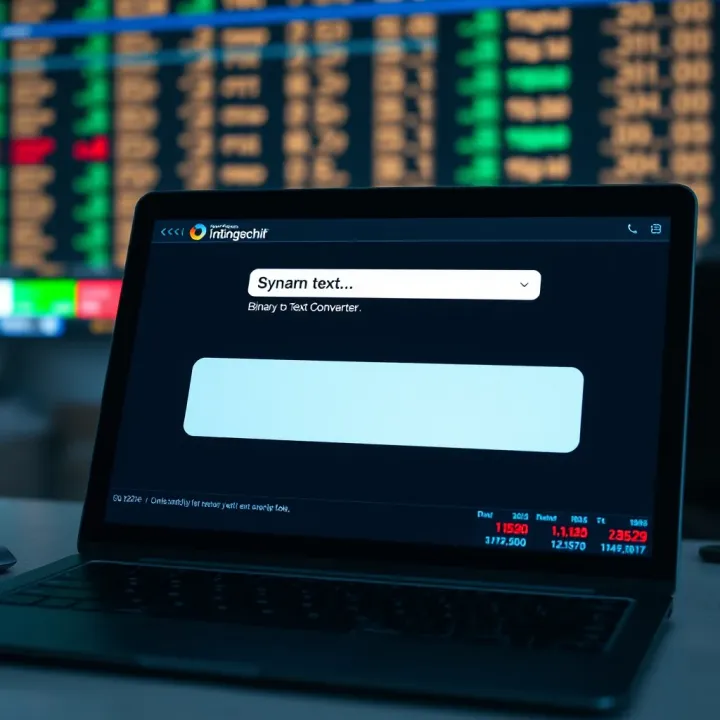
Converting binary data into readable text is essential for understanding how computers store and process information. Without this conversion, binary code remains an unintelligible sequence of 0s and 1s. By transforming it into text, users can interpret stored data conveniently, whether it's reading a document file, viewing a message, or analysing system logs.
Understanding stored data plays a vital role when dealing with files or databases that store information at the binary level. For instance, when a financial analyst examines reports generated by accounting software in Pakistan, the underlying stored data may be in binary form. Using binary to text conversion helps decode such data into familiar language or numbers, facilitating analysis and decision-making. Similarly, during data forensics, experts decode binary footprints to uncover important information hidden in digital records.
In the context of communication in computing, binary to text conversion allows proper exchange and interpretation of information across different devices and software. Computers inherently communicate in binary, but displaying this raw data to users is impractical. Hence, protocols and applications convert binary sequences into text to ensure clear messaging. For example, when sending emails or SMS through Pakistani telecom services like Jazz or Zong, the text is first converted to binary for transmission, then decoded back to text on the receiver’s end. This process preserves message integrity and enables smooth communication across varied platforms.
Software development often involves working closely with binary data, especially in debugging or handling lower-level system operations. Developers use binary to text conversion to verify the correctness of encoded messages or configuration files. When writing Pakistan-based applications that interact with hardware or network layers, converting binary helps translate machine instructions into meaningful code, ensuring the software behaves as expected.
Data transmission relies heavily on binary to text conversion for error-free communication over the internet or mobile networks. Pakistani users streaming videos, downloading financial reports, or using online banking apps depend on converting complex binary data into readable formats without glitches. During transmission, data is often compressed or encrypted in binary, and converting it ensures that the final output—the video, text, or transaction confirmation—is accessible to users.
In educational purposes, binary to text conversion aids students and professionals in understanding computing fundamentals. Pakistani universities teaching computer science or IT include this topic to build practical skills. Practising manual or automated conversions helps learners grasp how computers store and manipulate text internally. It also supports preparation for competitive exams like CSS or PMS that include computer literacy segments.
Binary to text conversion bridges the gap between raw machine data and human-readable information, making it an indispensable process in computing, communication, and education.
Manual conversion from binary to text remains an essential skill despite availability of online tools. It provides deeper understanding of how computers interpret data, making it especially useful for traders and financial analysts who deal with raw machine-readable information. Knowing this method can help verify data integrity and resolve cases when automation tools deliver inaccurate results.
Binary data representing text is usually organised into 8-bit chunks called bytes. Each byte corresponds to one character according to standard encoding systems. Splitting a long string of binary digits into these 8-bit segments allows you to isolate individual characters for conversion. For example, the binary sequence 0100100001100101 can be broken into two parts: 01001000 and 01100101, each representing one letter.
This step is crucial because mixing bits across bytes leads to meaningless or corrupt characters. Accurate segmentation ensures each byte’s value correctly reflects the intended text symbol.
After breaking the binary string into bytes, you use an ASCII chart to find the matching character for each 8-bit pattern. ASCII (American Standard Code for Information Interchange) assigns numbers 0–127 to letters, digits, and control characters. Each number is represented in an 8-bit binary form.
By converting each binary byte to its decimal equivalent and looking it up on the ASCII chart, you get the corresponding letter or symbol. This method works well in most financial software systems that rely on ASCII or Unicode standards to encode text data.
Consider the binary string 01001000 01100101 01101100 01101100 01101111. Breaking it down:
01001000 converts to decimal 72, which corresponds to 'H'
01100101 converts to 101, corresponding to 'e'
01101100 converts to 108 ('l')
Repeating the process spells out Hello. This simple conversion shows how bits translate into readable text.
Practically, this process helps when decrypting message data sent over financial networks or troubleshooting encoding errors in trading platforms. While manual conversion may seem slow, it reinforces foundational understanding useful for complex data interpretation tasks.
Mastering manual binary-to-text conversion equips you with a reliable backup when digital tools fail or produce questionable outputs. It also helps grasp how the underlying data flows in your financial systems and how text data integrity is maintained.
Online binary to text converters simplify the process of turning binary code into readable text. Instead of manually decoding strings of 0s and 1s, these tools instantly translate the data, saving time and reducing errors. For professionals in financial analysis, trading, or cryptocurrency, quick access to accurate information is vital, making these converters particularly useful.
Ease of use: Most online converters feature clean, straightforward interfaces. You simply paste the binary input, click a button, and get readable text immediately. This ease removes the need for technical knowledge of encoding standards or byte segmentation. For example, if you receive a data file with binary strings from a developer, you don't need to struggle with manual conversion — the tool does it in seconds. This convenience is perfect for traders who need quick checks without wasting time.
Support for multiple encoding standards: Not all binary data follow the ASCII standard; some use Unicode or extended sets to represent diverse characters, including Urdu or Punjabi script. Good converters allow users to select the correct encoding type before conversion. This flexibility ensures the output text matches the original data, preventing misinterpretation. For instance, a financial analyst dealing with multilingual reports benefits greatly from a tool supporting UTF-8 or UTF-16 alongside ASCII.
Several websites and standalone software cater well to Pakistani users due to their language support and reliable performance. For example, popular international sites like RapidTables or BinaryHexConverter offer free online conversion with options for different encodings. Locally developed software or apps sometimes integrate Urdu script support and adapt for Pakistani internet speeds, making them handy for daily use.
In addition, browser extensions designed for quick binary to text conversion can streamline workflow for frequent users. Many tools are mobile-friendly, allowing access through smartphones on networks like Jazz or Zong, which is convenient given the frequent online activity during market hours.
Accurate binary to text conversion tools boost efficiency in financial sectors by ensuring that code-driven data remains clear and actionable. Choosing the right tool with ease of use and proper encoding support is key to reliable results.
Overall, online binary to text converters offer vital support for anyone dealing with raw data. Whether validating messages, checking logs, or interpreting encrypted communication, knowing where to find and how to use these tools helps streamline work, especially in Pakistan's fast-growing digital economy.
Errors in binary to text conversion can lead to confusing results, garbled messages, or outright failure to decode data. For traders, investors, and analysts relying on accurate textual data extracted from binary feeds or reports, knowing how to troubleshoot and address common problems is critical. This section outlines key issues you may encounter and practical ways to resolve them.
Binary sequences must adhere to strict formats—usually groups of 8 bits representing a character. Identifying incorrect binary input involves spotting sequences that don't fit these rules. For example, a binary segment like 11010201 contains digits other than 0 or 1, indicating corruption or typing errors. Similarly, input lengths that don’t divide evenly into 8-bit chunks can produce errors or incomplete conversion.
Recognising these invalid inputs quickly helps avoid wasting time on faulty data. Traders analysing binary encoded market news must confirm their inputs contain only valid bits without random noise or corrupted segments.
Correcting mistakes often means verifying the source. If you extracted binary manually, double-check each group to be exactly 8 bits long and contain only zeroes and ones. For instance, a sequence like 101010101 (9 bits) needs trimming or splitting correctly for accurate decoding. Automated tools might reject faulty input outright; manual review or simple scripts can flag such invalid segments for correction.
Different text encoding standards interpret binary patterns differently. ASCII covers standard English characters, while Unicode supports multiple languages and symbols. If you supply binary data expecting ASCII but the text was encoded in Unicode, the output will be unintelligible, producing strange symbols or question marks.
Matching binary data to the correct encoding system is essential before conversion. Financial analysts dealing with global market data should confirm the encoding used—whether it's ASCII, UTF-8, or UTF-16—to avoid misreading critical information.
Avoiding misinterpretation hinges on clear identification and appropriate converter settings. Some online tools allow you to specify encoding standards; set these parameters exactly as per your data. Ignoring this can cause misaligned characters, leading to flawed decisions based on incorrect text.
Always verify both the binary input validity and encoding type before converting to ensure clean, reliable text. This simple precaution reduces errors significantly, saving time and protecting your investment decisions.
By staying alert to input quality and encoding compatibility, you ensure your binary to text conversion runs smoothly and produces useful, accurate information for your trading or analysis needs.
Explore binary converters 🔢: learn how they work, manual & digital methods, common uses, and troubleshooting tips. Perfect for students & tech pros.

Explore the binary number system’s basics and its key role in computing and digital electronics. Learn how to read, convert, and apply binary code with handy PDF guides 📘💻
Explore how binary multiplication works with clear steps, real examples, common computing algorithms, and its significance in digital tech ⚙️💻🔢.

Learn how to add binary numbers step-by-step with clear examples 🧮. Master rules and avoid common mistakes in binary addition for computing basics.
Based on 7 reviews