
Choosing the Best Forex Trading Platform in Pakistan
Looking for the best forex trading platform in Pakistan? Discover key features, security, costs, tools, and support to pick the right fit for you 📈💼
Edited By
Amelia Dawson
Forex trading, or foreign exchange trading, involves buying and selling currencies with the goal of making a profit from changes in exchange rates. Unlike stock markets, forex is the largest financial market worldwide, with a daily volume exceeding $6 trillion. This activity allows traders and investors to capitalise on currency value fluctuations driven by global events, economic indicators, and central bank policies.
In Pakistan, forex trading has gained traction among financial analysts, investors, and even cryptocurrency enthusiasts exploring alternative avenues. Understanding the basics is essential before diving in, especially considering the unique regulatory landscape and market dynamics here.
Currency pairs always trade in relation to each other, such as USD/PKR (US dollar against Pakistani rupee) or EUR/USD (euro against US dollar). When you buy a currency pair, you are buying the base currency and selling the quote currency. For example, buying USD/PKR means purchasing US dollars while selling Pakistani rupees.
Prices move in response to supply and demand, geopolitical events, interest rate changes by central banks like the State Bank of Pakistan (SBP), and economic reports. Traders use various tools and platforms to analyse these factors and make decisions.
Banks and financial institutions: They provide liquidity and execute large currency trades.
Corporates: Engage in forex to hedge risks from international trade.
Retail traders: Individual investors using platforms like MetaTrader or local brokers.
Central banks: Influence markets by adjusting monetary policy and intervening when needed.
Forex trading is highly volatile and can result in significant losses. Using leverage amplifies both gains and losses. Understanding margin requirements, stop-loss orders, and proper risk management is vital to protect your capital.
"Successful forex trading relies not just on predictions but on disciplined strategy and risk control."
For Pakistani traders, awareness of regulatory requirements by the Securities and Exchange Commission of Pakistan (SECP) and adherence to PTA policies for online trading platforms is important to avoid penalties and ensure secure trading.
To begin, open an account with a reputable broker registered with SECP, preferably one with good reviews and transparent fee structures. Start with demo accounts to familiarise yourself with market operations. Follow economic news, SBP announcements, and global developments that may affect currency rates.
In summary, forex trading offers opportunities but demands careful study, practical experience, and respect for market risks, especially within Pakistan's regulatory and economic context.
Understanding the basics of forex trading lays a strong foundation for anyone looking to enter the currency market. It is essential because forex trading operates differently from stocks or commodities, offering unique opportunities and risks. For Pakistani traders, grasping these fundamentals helps make informed decisions in a fast-moving global market.
Forex trading, short for foreign exchange trading, involves buying and selling currencies against each other. Traders aim to profit from changes in exchange rates by predicting whether a currency will strengthen or weaken. For example, if a trader expects the US dollar (USD) to gain value against the Pakistani rupee (PKR), they would buy USD/PKR with the intention to sell later at a higher price.
Currencies in forex trade are always exchanged in pairs; one currency is bought while the other is simultaneously sold. This means if you purchase the EUR/USD pair, you are buying euros and selling US dollars at the same time. This mechanism allows traders to speculate on economic conditions, interest rates, or political stability of different countries, affecting currency values.
Unlike stock exchanges, forex is an over-the-counter (OTC) market where trading occurs directly between two parties without a centralised exchange. This decentralisation means trading is continuous and widely accessible, with transactions happening around the clock through financial institutions, brokers, and electronic platforms. For Pakistani investors, OTC markets allow flexible trading hours and access to global currencies.
The forex market operates 24 hours a day, five days a week, divided into major sessions based on geographic locations: Sydney, Tokyo, London, and New York. Each session reflects different market behaviours and volatility levels. For Pakistani traders, peak activity often occurs during the London and New York sessions, when liquidity is highest and price movements can be more significant.
Forex trading revolves around currency pairs such as USD/PKR, EUR/USD, and GBP/USD. The first currency is the base, and the second is the quote. The price or quotation shows how much of the quote currency is needed to buy one unit of the base currency. For instance, if USD/PKR is quoted at 280, it means Rs 280 buys 1 US dollar. Understanding these quotes is vital for calculating potential profit or loss.
Supply and demand strongly influence price fluctuations in forex. When demand for a currency rises, its value typically increases against others, and vice versa. These shifts can be driven by economic news, central bank actions, political events, or market sentiment. For example, if Pakistan’s exports increase, demand for PKR may rise as foreign buyers convert their currencies, pushing its value upwards.
Grasping the basics equips traders to interpret market signals properly and manage the risks involved. It also aids in selecting suitable trading strategies tailored to real market conditions.
This section sets the stage for more detailed topics on forex participants, risks, and practical trading steps, especially relevant for investors in Pakistan’s growing forex landscape.
Understanding who the key players are in forex trading helps you grasp how currency prices move and how you can find opportunities. Each group contributes differently to the market, influencing liquidity, volatility, and price trends.
Central banks and governments hold significant influence over forex markets. They intervene to stabilise or steer their national currencies by adjusting interest rates or directly buying/selling currencies. For example, the State Bank of Pakistan (SBP) might intervene to support the rupee when facing pressure against the US dollar. These actions affect exchange rates massively and create trading opportunities or risks.
Central banks also maintain forex reserves and set monetary policies that traders watch closely. A sudden change in SBP's policy rate or foreign currency reserves disclosure can trigger sharp market moves. Knowing these dynamics helps traders anticipate market sentiment shifts.
Commercial banks and financial institutions form the backbone of forex trading, executing the majority of volume daily. These institutions provide currency liquidity to clients and themselves. For instance, banks like Habib Bank Limited or MCB might buy or sell large amounts to meet importers' needs or hedge currency risks.
These players act as market makers, quoting bid and ask prices. Their activity narrows spreads and improves market efficiency. Retail traders indirectly depend on this liquidity to enter or exit trades at competitive rates.
Retail traders and brokers make up a growing segment, particularly in Pakistan with rising digital access. Brokers bridge retail traders to global liquidity providers. Platforms like MetaTrader 4/5 or local brokers enable individual investors to participate with relatively small capital.
Retail traders' actions can move markets during low liquidity sessions, especially with leveraged positions. Choosing a reliable broker with transparent pricing and local support is critical. Many Pakistani traders prefer internationally regulated brokers who accept PKR deposits through JazzCash or Easypaisa.
Access through local and international brokers has expanded thanks to online platforms. Pakistani traders commonly use brokers registered outside Pakistan to access global forex markets, since local regulations limit full forex services.
Banks do not offer retail forex trading directly, so most retail participants rely on brokers with accounts in Pakistan or third countries. While this offers more choices and leverage options, it requires care to avoid unregulated brokers.
Popular trading platforms in Pakistan include MetaTrader 4 and 5 due to their user-friendly interface and wide broker compatibility. Additionally, platforms like cTrader or proprietary broker platforms are gaining spots for advanced charting and faster execution.
Many Pakistani traders use mobile apps extensively given smartphone penetration. These platforms also support strategies such as spot trading, scalping, and automated algorithms.
Regulatory considerations are vital. The SBP does not permit retail forex trading with leverage inside Pakistan, limiting local formal channels. This pushes traders to international brokers, frequently regulated by FCA (UK), CySEC, or ASIC.
FBR requires declaration of income from forex trading for tax purposes. Traders should keep detailed records to comply with Pakistan's tax laws and avoid penalties. Also, PTA and SBP rules govern foreign exchange transactions, so awareness prevents legal issues.
Retail forex trading in Pakistan involves navigating broker choice, platform usability, and regulatory limits. Staying informed about these factors can help you trade safely and effectively.
Knowing the risks and opportunities in forex trading helps traders make informed decisions and protect their capital. It is not just about making quick profits; understanding the market pitfalls and advantages can make a trader more resilient, especially in a fast-moving market like forex.
Forex markets can swing wildly within minutes, influenced by economic data, geopolitical events, or central bank announcements. For instance, a sudden change in SBP policy rates might cause the PKR exchange rate to fluctuate rapidly. Traders using high leverage may find that even a small price movement leads to significant gains or losses. While leverage amplifies the potential for profit, it also magnifies losses, sometimes beyond the initial investment. As a result, many traders must actively manage their positions to avoid margin calls and forced liquidations.
The forex market is mostly OTC (over-the-counter), meaning trades happen directly between parties, often through brokers. This exposes traders to counterparty risk—the chance that the other party might default or delay settling a trade. Additionally, liquidity varies across currency pairs and market hours. During Pakistan’s national holidays or off-market sessions, liquidity can thin, resulting in wider spreads or even difficulty exiting positions. This lack of liquidity can cause slippage, where trades execute at less favourable prices than expected, increasing potential losses.
Forex attracts many newcomers, making it a target for fraudsters. Scam brokers may promise guaranteed profits or offer unrealistic leverage to lure investors. In Pakistan, it’s important to verify if brokers are regulated by trusted authorities, such as the Securities and Exchange Commission of Pakistan (SECP) or respected international regulators. Beware of Ponzi schemes disguised as forex trading platforms or signal providers demanding upfront fees without clear track records. Vigilance and proper research are key to avoiding these traps.
One of forex trading’s biggest advantages is round-the-clock availability. The market runs 24 hours from Sunday evening in Pakistan until Friday evening, allowing traders to respond to global events anytime. For example, a Pakistani trader can react to US Federal Reserve announcements late at night PKT or Asian economic releases early morning. High liquidity, especially in major pairs like USD/PKR or EUR/USD, means traders can enter or exit trades quickly with minimal price disruption.
Forex trading lets you go long (buy) if you expect a currency to strengthen or go short (sell) if you anticipate a decline. This two-way possibility means you can potentially profit whether the market rises or falls. For instance, if the PKR weakens against the dollar due to political uncertainty, traders can short PKR/USD pairs to gain from the depreciation. This flexibility distinguishes forex from traditional investing where profit mainly comes from price appreciation.
Leverage allows traders to control large positions with relatively small capital. For example, with 1:50 leverage, you can trade Rs 1 lakh worth of currency by putting up Rs 2,000 only—a powerful way to multiply profits on successful trades. However, it's essential to use this tool carefully since losses also grow proportionally. Pakistani traders often utilise modest leverage to balance risk and opportunity, rather than overexposing themselves in volatile markets.
Understanding both sides—the risks and the gains—helps you approach forex trading carefully and confidently. Wise use of tools like leverage, awareness of market conditions, and awareness of scams improves your chance of success in this dynamic market.
Starting forex trading in Pakistan involves understanding specific local challenges and advantages that affect your trading journey. A solid beginning means choosing the right tools, strategies, and ensuring compliance with national regulations to avoid pitfalls.
Selecting a reliable broker is essential for smooth trading. Pakistani traders should look for brokers regulated by top-tier financial authorities abroad, such as the FCA (Financial Conduct Authority) in the UK or ASIC in Australia. This ensures your funds and trades are protected. Check for transparent fee structures, fast execution speeds, and good customer support. Local availability of deposit and withdrawal methods via JazzCash or Easypaisa can be a bonus.
Popular trading platforms like MetaTrader 4 (MT4) and MetaTrader 5 (MT5) are widely used for their user-friendly interface and extensive toolsets. Some brokers also offer cTrader or proprietary platforms with enhanced features for strategy testing and mobile trading. Choosing a platform that supports your preferred analysis style and runs smoothly on your devices is vital to maintain flexibility.
Technical analysis involves studying charts, price movements, and indicators like moving averages or RSI to forecast future price action. Fundamental analysis focuses on economic news, interest rates, and geopolitical events that affect currency values. Combining both approaches can improve your prospects by balancing market sentiment with market data.
Risk management techniques must be part of your trading plan. This includes setting stop-loss orders, limiting the size of each trade relative to your overall capital, and using leverage cautiously. In Pakistan, where forex trading risks are sometimes underestimated, strict risk control helps prevent significant losses, especially during volatile periods like political events or sudden rupee fluctuations.
The Federal Board of Revenue (FBR) requires Pakistani traders to report income earned from forex trading as taxable income. Maintain accurate records of profits and losses to comply with tax filings. Ignoring these obligations can lead to penalties or tax audits.
At the same time, the State Bank of Pakistan (SBP) oversees foreign exchange regulations that traders must follow. This includes restrictions on exchanging PKR with foreign currency outside regulated channels. Using authorised brokers that comply with SBP rules ensures your trading does not violate local laws, protecting you from legal issues or blocked transactions.
Starting forex trading without understanding these practical and regulatory details is like sailing without a compass. The local nuances matter significantly.
By carefully choosing brokers, applying tested strategies, and ensuring legal compliance, you set yourself up for a trading journey that is not only potentially profitable but also secure and above board.
Looking for the best forex trading platform in Pakistan? Discover key features, security, costs, tools, and support to pick the right fit for you 📈💼
Find the best forex trading platform in Pakistan 🇵🇰 with our clear guide! Compare brokers, explore key features, and trade confidently today 📈💼
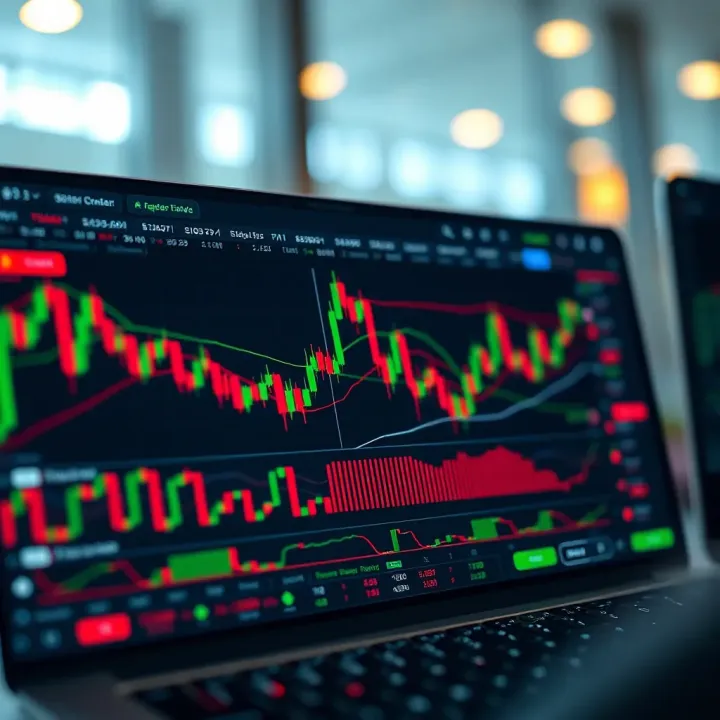
Looking for the best forex trading app in Pakistan? Discover top choices, security tips, and how to trade safely for a reliable experience 📈🇵🇰
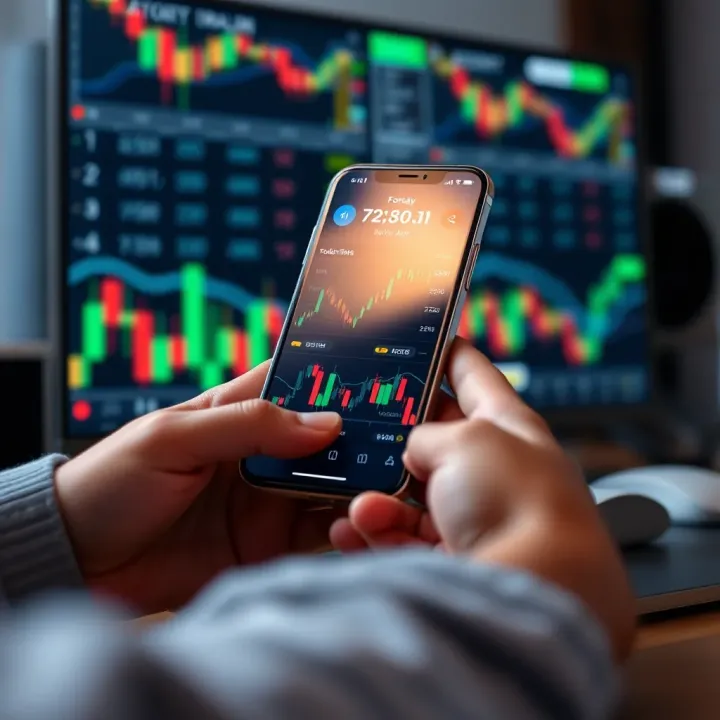
📱 Discover the best forex trading apps in Pakistan! Learn key features, compare top platforms, and understand security & regulations for confident trading. 🇵🇰
Based on 11 reviews