

Is Forex Trading Halal? Islamic View Explained
Is forex trading halal according to Islamic law? This article discusses trader ethics, Islamic finance principles, and expert views relevant to Pakistani Muslims 📈🕌
Edited By
Daniel Morgan
Forex trading, or currency trading, has surged in popularity worldwide, including in Pakistan where many traders and investors see it as a way to diversify portfolios. However, for Muslims, the core question remains: Is forex trading halal (permissible) under Islamic law? This topic demands clear understanding because Islamic finance principles strictly govern permissible financial activities.
Islamic law, or Shariah, sets guidelines for financial transactions focusing on fairness, transparency, and avoidance of prohibited activities such as riba (usury), gharar (excessive uncertainty), and maysir (gambling). Forex trading involves exchanging one currency for another, with profits made from the difference in exchange rates. But these operations must adhere to Shariah-compliant conditions to be considered halal.

To determine permissibility, one should consider:
Immediate possession (qabdh): Both parties must own and control the currencies exchanged without delay.
Avoidance of interest (riba): Trades must not include any interest-bearing elements, which can sometimes occur in leveraged transactions or rollover (swap) fees in forex platforms.
No excessive uncertainty (gharar): Transactions should be clear-cut, with defined terms and no ambiguity.
Notice that many conventional forex platforms offer leverage or margin trading, amplifying both risk and potential reward. Islamic scholars are concerned about leverage as it often involves paying or receiving interest, which is unlawful. That said, some brokers provide Islamic forex accounts that avoid these charges by eliminating swap fees and enforcing immediate settlement rules.
Islamic forex trading requires strict compliance with Shariah principles to avoid prohibited elements involving interest and uncertainty.
Understanding how these principles apply helps Muslims engage in forex trading ethically. In the upcoming sections, we will look into various scholarly opinions and practical steps to ensure your trading remains halal while navigating modern forex markets.
Understanding the basics of Islamic finance is essential when discussing whether forex trading fits within Shariah law. Islamic finance is governed by principles that ensure economic activities comply with ethical and religious guidelines. These principles aim to promote fairness, discourage exploitation, and encourage socially responsible investments. Knowing these basics helps traders identify halal trading practices that align with their faith.
Riba, commonly understood as interest, is strictly forbidden in Islamic finance. This means that any guaranteed and predetermined return on capital, regardless of risk, is not allowed. For example, receiving a fixed interest on a loan without sharing in the business's outcome is considered riba and thus impermissible. This principle is particularly relevant to forex trading, where interest-bearing swaps or rollover charges often appear. Islam encourages profit and loss sharing rather than guaranteed interest.
Islamic finance insists that financial transactions should be linked to real economic activity or tangible assets. This discourages speculative deals detached from physical goods or services. For a practical example, a trade involving wheat or property directly connects money to an asset. In the forex market, this principle raises questions when trading purely on currency price movements without owning the underlying currency itself. Ensuring trades involve immediate exchange and ownership is key in meeting this standard.
Investments and trades must avoid businesses or contracts involving harm or unethical practices such as gambling, alcohol, or pork-related products. Islamic finance promotes social welfare and justice. A practical example is avoiding shares of companies that manufacture prohibited products. These rules encourage investors and traders to consider the broader impact of their activities, not just profits.
A halal trade requires clear, upfront information about terms and conditions, avoiding deception or exploitation. For example, both parties should agree on price, quantity, and delivery before completing a contract. In forex, this means brokers and traders need full clarity on fees, execution speed, and settlement terms to avoid unfair surprises.
Islamic markets promote sharing risks and rewards between parties instead of one-sided risk transfer. For instance, in a partnership, both profit and loss are shared. This contrasts with conventional derivatives or speculative contracts where one party offloads risk to another without sharing potential gain. Forex traders must differentiate between genuine investment and zero-sum speculation to align with this principle.
Gharar refers to ambiguity, uncertainty, or deceit in contracts. Islamic law discourages deals where critical details are unknown or speculative. A classic example is betting on unknown outcomes without clear terms. In forex, excessive gharar might occur when trades involve unclear timing, prices, or deliverables. Ensuring contracts are explicit and settled immediately helps reduce gharar risks.
These principles provide a foundation for distinguishing halal trading within modern markets. For anyone engaged in forex, understanding these criteria is vital to navigate the complex intersection of faith and finance appropriately.
Understanding how forex trading operates is essential, especially when evaluating its permissibility under Islamic principles. Forex trading involves exchanging currencies in a global market that runs around the clock, driven by factors like economic indicators, geopolitical events, and market sentiment. Grasping its mechanics helps Pakistani traders make informed decisions while staying mindful of ethical considerations.
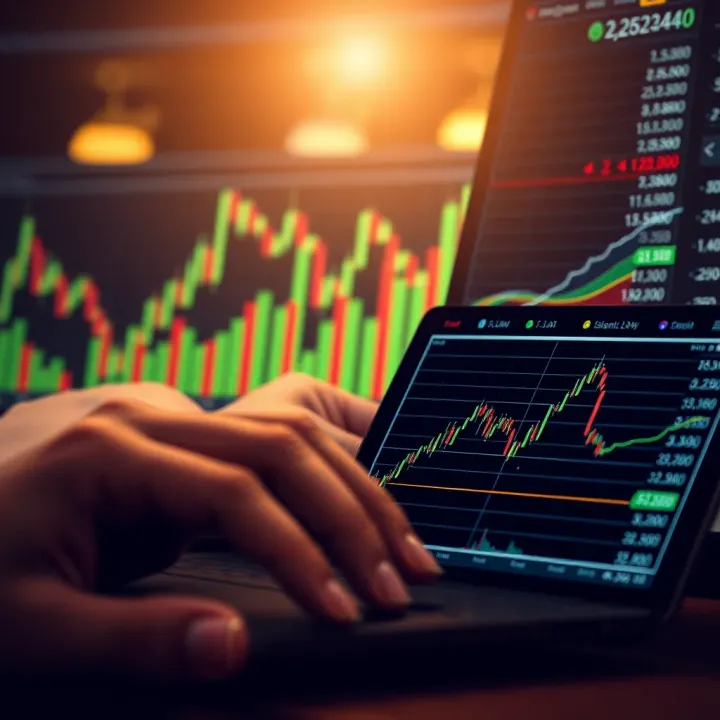
Forex trading primarily happens in spot markets, where currencies are exchanged immediately or within a short timeframe. Currencies are traded in pairs, for example, USD/PKR or EUR/USD, which shows how much of one currency is needed to buy one unit of the other. This pairing is fundamental since trading one requires selling the other simultaneously. For a Pakistani trader, focusing on major pairs like USD/PKR can help understand market trends and liquidity better.
Leverage and margin play a prominent role in forex. Leverage allows a trader to control a large position with a relatively small amount of capital, called the margin. For instance, with 1:100 leverage, a trader can manage $10,000 by putting down only $100. While this can boost profits, it equally magnifies losses, making it a double-edged sword. Understanding margin requirements and leverage's impact is vital to managing risks effectively.
Market participants include retail traders, banks, hedge funds, corporations, and central banks, all flowing through electronic trading platforms. These platforms, such as MetaTrader or cTrader, provide access to real-time prices, analysis tools, and order execution. For Pakistani traders, selecting a reliable and regulated platform ensures transparency and security, helping avoid fraudulent or opaque practices.
Speculation and hedging are two sides of the same coin in forex markets. Speculation involves trying to profit from price movements, often a risky approach depending on market volatility. For example, a trader might buy USD expecting it to strengthen against the PKR. Hedging, however, is about protecting existing investments or business exposures against adverse currency moves, such as an importer locking in exchange rates ahead of payment. Differentiating these helps in assessing ethical boundaries in Islamic finance.
Swaps and rollover fees occur when positions are held overnight. This involves paying or earning interest based on the interest rate differential between the two currencies. Many traditional brokers charge swaps, which pose challenges for Muslim traders due to prohibition of interest (Riba) in Islam. This led to the rise of swap-free Islamic accounts that eliminate these fees for compliant trading.
Leverage dramatically influences trading by allowing bigger exposure with less capital. While attractive for profit potential, this also increases market risk and requires careful management. From an Islamic viewpoint, excessive leverage can resemble borrowing with interest and increase uncertainty, which needs cautious consideration when engaging in forex trading.
In forex, practical knowledge of how these features operate supports ethical and informed decisions, enabling you to align trading methods with Islamic principles effectively.
Understanding whether forex trading is permissible (halal) is vital because it directly impacts how Muslims can engage in global financial markets without compromising their religious principles. Evaluating its permissibility requires careful examination of the transaction mechanics against Islamic law (Shariah). Traders must be aware that some features common in forex trading could conflict with Islamic finance principles, affecting the trader's ethical and legal standing.
Islamic finance stresses that currency exchange should happen immediately, often described as hand-to-hand payment, meaning the actual transfer of currency must be concurrent. This rule is crucial because it prevents undue delay that may result in speculation or unfair gain. In practical terms, if a trader sells one currency for another, the settlement must occur on the spot, not deferred to a future date.
For example, a spot forex trade conducted with real-time exchange aligns with this requirement. However, if the trade involves delivery at a later time, it could be seen as a form of deferred sale, which classical Islamic law prohibits in currency exchange.
Riba or interest is forbidden in Islam as it exploits the borrower and creates unjust gain without due effort. Forex transactions must avoid any element of interest, such as rollover or swap fees charged overnight by many brokers. These interest-based charges turn what could be a halal trade into an impermissible one.
To avoid Riba, Islamic forex accounts are offered by some brokers in Pakistan and globally, which eliminate overnight interest charges while maintaining basic trading functions. Traders should confirm that these accounts meet genuine Islamic standards and avoid hidden fees that may imitate interest.
Islamic law discourages Gharar, which means excessive uncertainty or ambiguity in contracts. Forex trading must involve clear terms, pricing, and execution without misleading conditions. The complex leverage systems or hidden spreads in conventional forex can introduce Gharar.
Practical application requires traders to ensure they understand all charges before entering a trade. Transparent pricing and honest broker practices help avoid excessive uncertainty, supporting a halal trading environment.
Some contemporary Islamic scholars consider forex trading permissible if certain conditions are met, mainly adherence to immediate settlement, avoiding Riba, and steering clear of speculative behaviour. They argue that spot forex trading without interest or delays respects Islamic principles.
These views particularly appeal to traders who use forex for legitimate hedging or business purposes, rather than pure speculation. For instance, a Pakistani exporter covering currency risk might benefit from halal forex trading under these guidelines.
Others critique forex trading because of heavy leverage use and speculative nature, comparing it to gambling (Maisir) — which Islam forbids. They point out that high-risk positions based purely on price movement bets, without underlying assets or production, violate the spirit and letter of Shariah.
Excessive reliance on borrowed funds not only increases risk but also involves interest, multiplying concerns about its permissibility. This view urges Muslims to avoid forex markets unless they can trade without leverage and speculation.
Islamic scholarship does not present a unanimous verdict on forex trading. While some scholars are open to its halal use with conditions, others firmly reject it due to modern market practices. This divergence arises because contemporary financial instruments often do not fit neatly into classical Islamic jurisprudence.
Muslim traders should seek advice from trusted scholars familiar with modern finance and consider their own risk approach. Staying updated on evolving rulings from recognised Islamic finance bodies in Pakistan and abroad provides practical guidance for ethical forex engagement.
In all cases, the focus remains on balancing profitable trading with adherence to Islamic ethical and legal standards, an effort that requires both knowledge and caution.
Forex trading carries specific concerns for Muslims aiming to comply with Islamic law, mainly because some common practices may involve prohibited elements like interest (Riba) or excessive uncertainty (Gharar). Understanding these risks helps traders avoid unintentional violations and make informed choices consistent with Shariah. It also protects their investments from unnecessary hazards that arise from speculative or unethical conduct.
Conventional forex brokers often charge overnight swap fees when a trader holds an open position past market close. These swaps represent interest payments for borrowing currency, which contradicts the Islamic prohibition of Riba. For example, if you buy USD against PKR and keep the position open overnight, you might be charged a swap fee reflecting interest rate differences, effectively involving you in an interest-based transaction.
To address this, many brokers offer swap-free Islamic accounts designed to eliminate these charges. These accounts remove overnight interest fees, allowing Muslim traders to participate without conflicts with Shariah. However, brokers might compensate by adding other fees, so it’s crucial to review the full cost structure before committing. Choosing a genuinely Shariah-compliant broker, preferably one regulated and transparent about their policies, offers better assurance.
A key concern in forex trading under Islamic ethics is the risk of treating the market like gambling. Rapid, random trades based purely on price swings without research or a strategic approach can resemble games of chance forbidden by Islam. This gambling-like behaviour increases financial risk and may harm one’s ethical standing.
Alternatively, traders can differentiate investment from speculation by focusing on informed, purposeful currency exchange based on economic indicators, geopolitical events, or hedging foreign currency exposure. This approach aligns better with Islamic values by emphasising real economic activity and risk sharing rather than mere guessing or luck. For instance, a Pakistani importer hedging against PKR depreciation to protect profit margins represents a legitimate halal practice.
Leverage allows traders to control larger positions with less capital, which magnifies both profits and losses. It adds complexity and increases vulnerability to market swings, often pushing traders toward risky behaviour. Using high leverage can expose traders to debt-like obligations if margin calls happen, complicating compliance with Shariah’s guidelines on debt and financial responsibility.
Islamic finance generally discourages borrowing with interest and excessive risk-taking. While some scholars permit limited credit usage if free of interest and clear terms, leveraging to the point of incurring debt or undue speculation contradicts Islamic principles. Therefore, Muslim traders should use leverage cautiously, ensuring it does not turn into interest-bearing debt or promote reckless trading. Ideally, minimal or no leverage aligns best with ethical trading in Islamic contexts.
Careful awareness of these concerns allows Muslim forex traders to navigate a complex market while respecting Islamic finance principles and protecting their investments from unlawful risks.
To navigate the complex world of forex trading while adhering to Islamic principles, practical guidance is vital. This helps Muslim traders participate in the currency markets without compromising on Shariah rules. Understanding how to select compliant brokers, manage risks, and consult Islamic scholars offers a clear path to ethical trading.
Islamic forex accounts are designed to avoid interest (riba) and speculative elements forbidden in Islam. Typically, these accounts do not charge overnight swap fees, which are conventional interest charges applied on positions held past market closing. Instead, brokers offering Islamic accounts structure fees in a way that complies with Shariah, often through fixed commissions or spreads. For example, many local and international brokers now provide swap-free Islamic accounts specifically tailored for Muslim traders in Pakistan and beyond.
Reputation and regulatory compliance are crucial when choosing a broker. Traders should verify that the broker is regulated by a trusted financial authority to minimise fraud risks. A broker's reputation can also signal trustworthiness and adherence to ethical practices. For instance, brokers registered with authorities such as the Securities and Exchange Commission of Pakistan (SECP) or international regulators like the FCA (UK) are preferable. This assures traders their funds are secured under a legal framework.
Spot trading involves the immediate exchange of currencies, which aligns well with Islamic principles emphasising hand-to-hand settlement without delay. Engaging in spot transactions reduces the uncertainty (gharar) factor and eliminates the risk associated with deferred settlements. Traders should therefore focus on spot forex contracts that settle immediately rather than delayed or forward contracts which may contain impermissible elements.
Avoiding interest-based fees and excessive speculation protects traders from practices considered gambling (maysir). Keeping trading strategies simple and transparent helps. For example, rather than over-leveraging or chasing rapid gains through speculative techniques, traders should adopt clear investment goals based on market analysis. Opting for brokers that provide swap-free accounts and openly disclose their fee structures helps avoid hidden interest charges.
Complex situations often arise in forex trading that standard rules may not fully cover. Consulting knowledgeable Islamic scholars who understand both fiqh (Islamic jurisprudence) and modern financial markets ensures that a trader's activities align with Shariah. Such advice can help clarify grey areas and provide personalised rulings, which are especially helpful for active traders facing intricate scenarios.
Keeping updated with evolving rulings is equally important. Islamic finance is a growing field, and opinions on forex trading continue to develop among scholars. Following fatwas and research from reputable institutions helps traders stay informed on any new guidelines or changes affecting forex market permissibility.
Practical adherence to Islamic ethics in forex trading requires ongoing effort—to choose the right broker, manage risks wisely, and seek qualified guidance.
Is forex trading halal according to Islamic law? This article discusses trader ethics, Islamic finance principles, and expert views relevant to Pakistani Muslims 📈🕌

🌐 Learn how to start forex trading in Pakistan with practical steps on choosing brokers, managing risks, and staying within legal rules in Pakistan's market.
📊 Learn to spot forex trading patterns to make smarter market moves. Discover tips, tools, and mistakes to avoid for confident trading decisions in Pakistan’s forex scene.
🌍 Explore forex trading in Pakistan with clear tips on profit strategies, risks, regulations, and practical advice to trade foreign currencies confidently and safely.
Based on 12 reviews